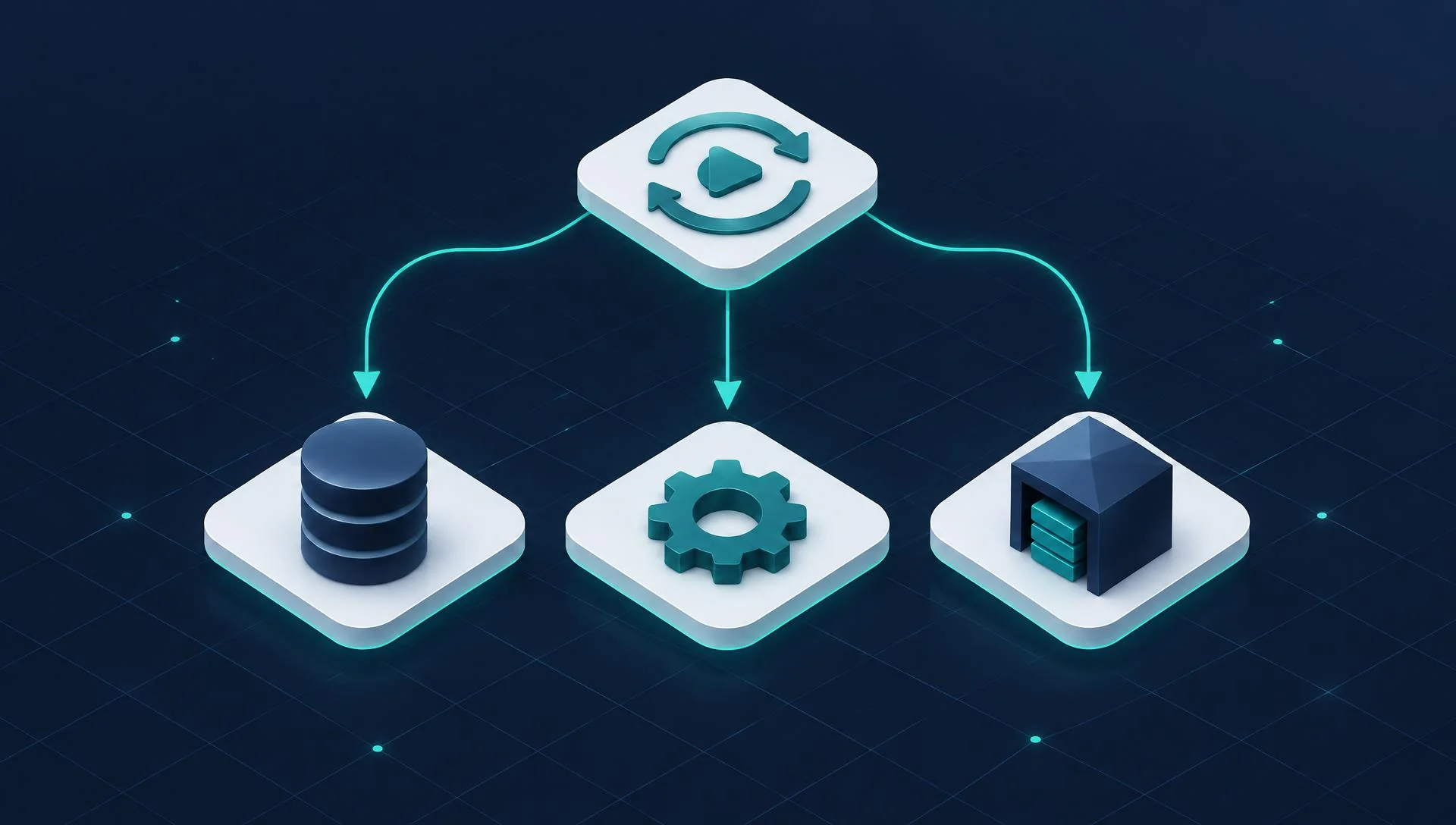
ETL mapping is the foundation of successful data integration. It defines how source data transforms into target structures—and getting it right is essential for data quality and project success.
What is ETL Mapping?
ETL mapping documents the relationship between source and target data elements:
- Source fields: Where data comes from
- Target fields: Where data goes
- Transformation rules: How data changes
- Business logic: Rules governing the transformation
Good ETL mapping serves as both design documentation and development specification.
Components of an ETL Mapping Document
Source-to-Target Mapping
The core of any ETL map:
- Source system and table
- Source field name and data type
- Target system and table
- Target field name and data type
- Transformation logic
Transformation Rules
Detailed specifications for data manipulation:
- Data type conversions
- Concatenation and parsing
- Lookups and joins
- Aggregations and calculations
- Conditional logic
Business Rules
Logic that governs data handling:
- Null handling
- Default values
- Exception processing
- Validation requirements
Technical Specifications
Implementation details:
- Load frequency
- Record processing type (insert, update, upsert)
- Error handling approach
- Performance requirements
ETL Mapping Best Practices
1. Start with Requirements
Understand the business purpose before mapping. What questions will this data answer? What decisions will it support?
2. Involve Business Users
Technical teams can't define business rules alone. Engage domain experts to validate mapping logic.
3. Document Assumptions
Every mapping involves assumptions. Document them explicitly so they can be validated.
4. Version Control Your Maps
Treat mapping documents like code. Track changes and maintain history.
5. Validate with Data Samples
Test mapping logic against real source data before full development.
6. Plan for Change
Sources and targets evolve. Design mappings that can adapt without complete rewrites.
7. Include Test Cases
Define expected results for mapping logic to enable automated validation.
Common ETL Mapping Challenges
Complex Transformations: Multi-step logic that's hard to document clearly. Break into discrete steps.
Incomplete Source Documentation: Sources without clear metadata. Profile data to understand actual content.
Conflicting Business Rules: Different stakeholders with different interpretations. Resolve conflicts early.
Performance Constraints: Mappings that work logically but not practically. Consider performance from the start.
Changing Requirements: Moving targets during development. Establish change control processes.
Tools for ETL Mapping
Spreadsheet-Based Tools
Simple and accessible but difficult to maintain at scale.
Dedicated Mapping Tools
Purpose-built for managing source-to-target documentation with versioning and collaboration.
Integrated ETL Platforms
Modern ETL tools include mapping capabilities that generate documentation from implementations.
Metadata Repositories
Enterprise tools that maintain mappings as part of broader metadata management.
Automating ETL Mapping
Modern approaches reduce manual mapping effort:
- Schema matching: Automatically suggest field mappings based on names and types
- Pattern detection: Identify common transformation patterns
- AI-assisted mapping: Use ML to propose mappings from similar projects
- Reverse engineering: Generate mappings from existing ETL code
Conclusion
ETL mapping is a discipline that requires attention to detail, business understanding, and technical rigor. Organizations that invest in good mapping practices reduce development time, improve data quality, and create maintainable integration solutions.
Frequently asked questions
How does a mapping become a test
Translate each declared rule into an independently evaluated expectation, then compare the actual output at the agreed grain and scope. Retain the mapping version and differences.
Should nulls be replaced automatically
Only where an approved business rule defines that treatment. Unknown, absent, and zero can have different meanings and should not be collapsed without justification.
Which mapping changes require regression testing
Assess changes to populations, keys, joins, calculations, lookups, types, and definitions for downstream impact. The owner should approve the relevant regression scope.