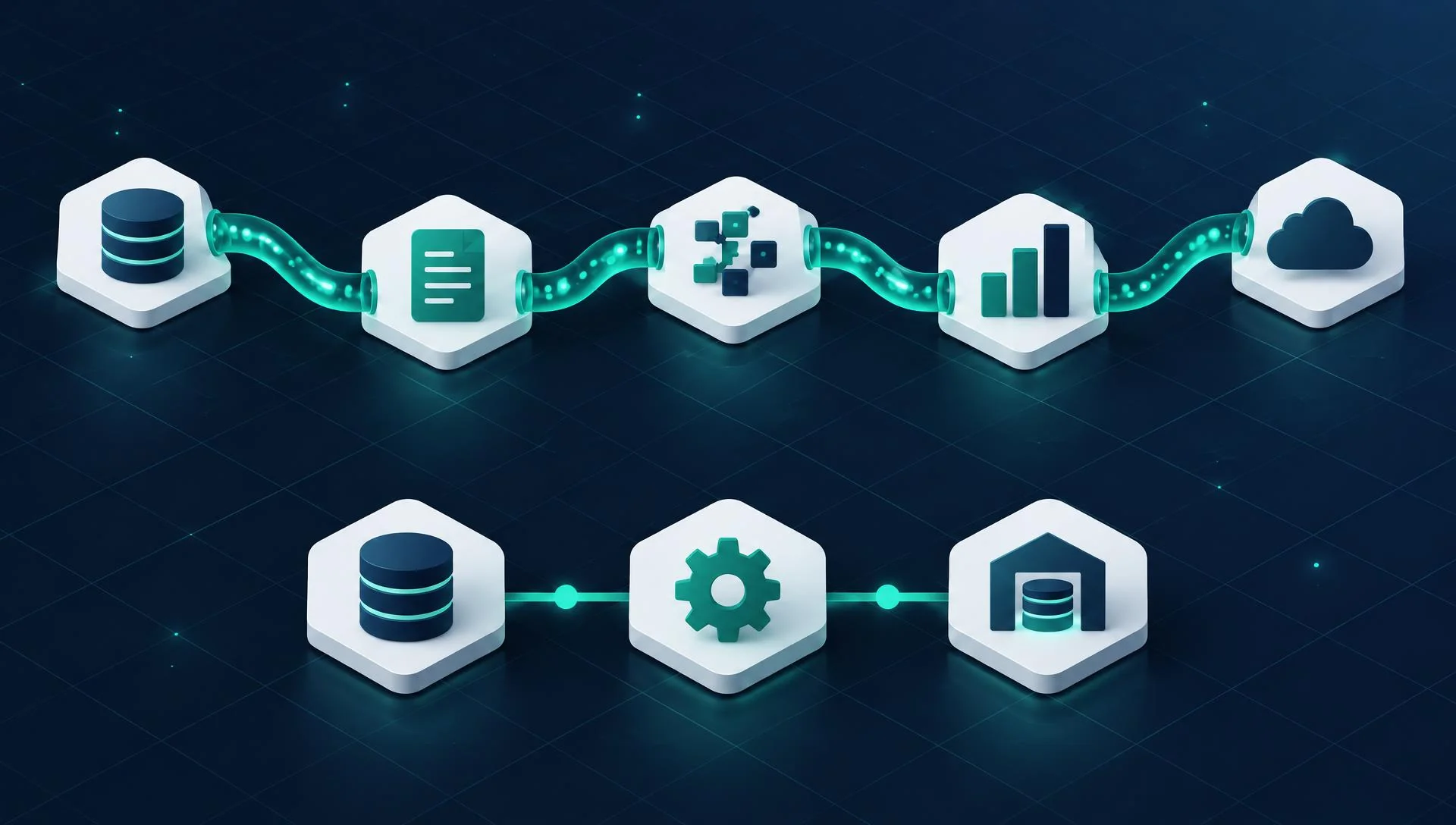
Understanding the difference between data pipelines and ETL is essential for modern data architecture. While these terms are sometimes used interchangeably, they represent different concepts with distinct use cases.
What is ETL?
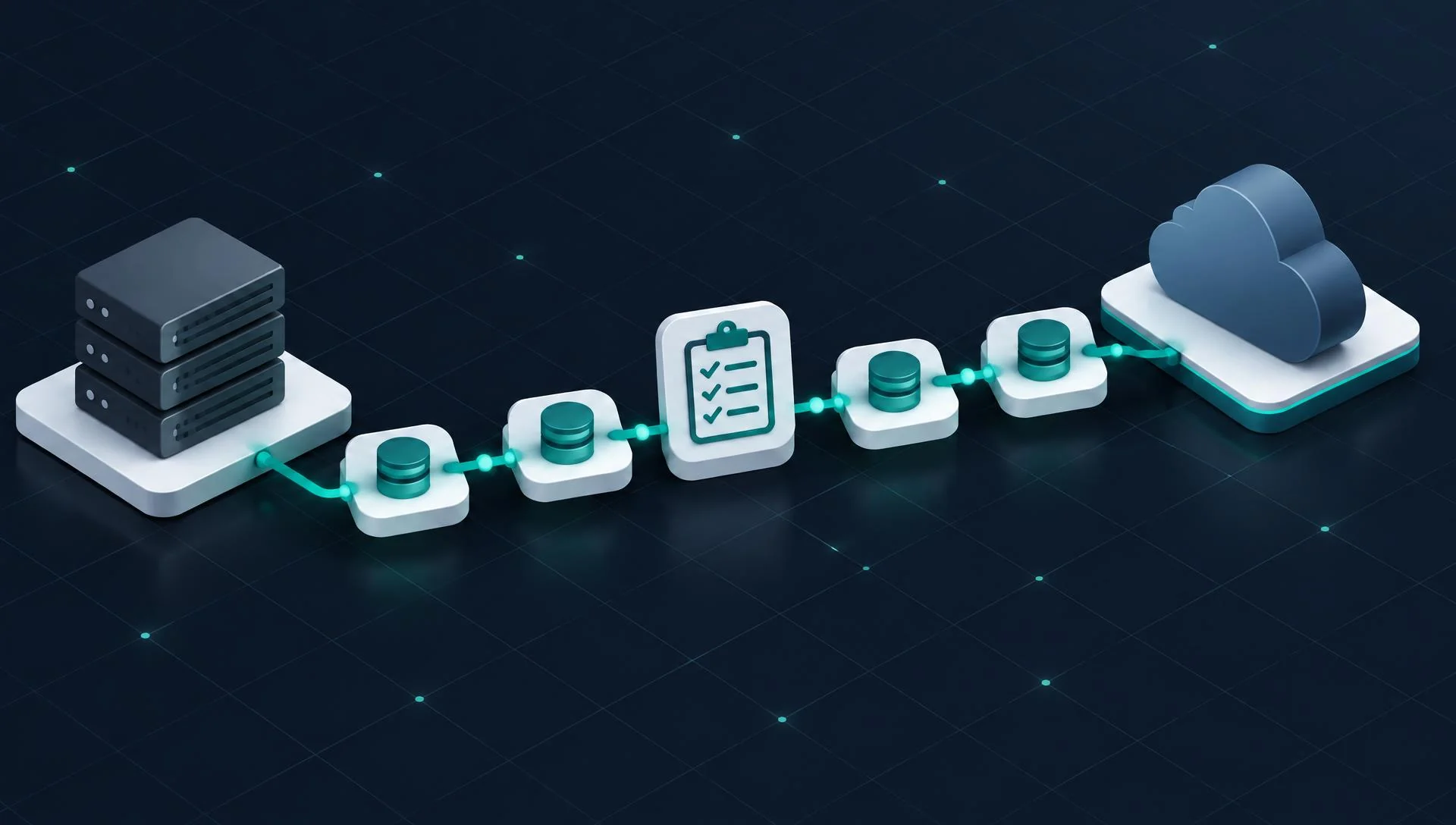
ETL (Extract, Transform, Load) is a specific data integration pattern:
- Extract: Pull data from source systems
- Transform: Apply business logic, clean, and restructure data
- Load: Write transformed data to a target system (typically a data warehouse)
ETL was the dominant paradigm for data warehousing for decades. It emphasizes transforming data before loading it into the target, ensuring the warehouse contains clean, structured data.
What is a Data Pipeline?
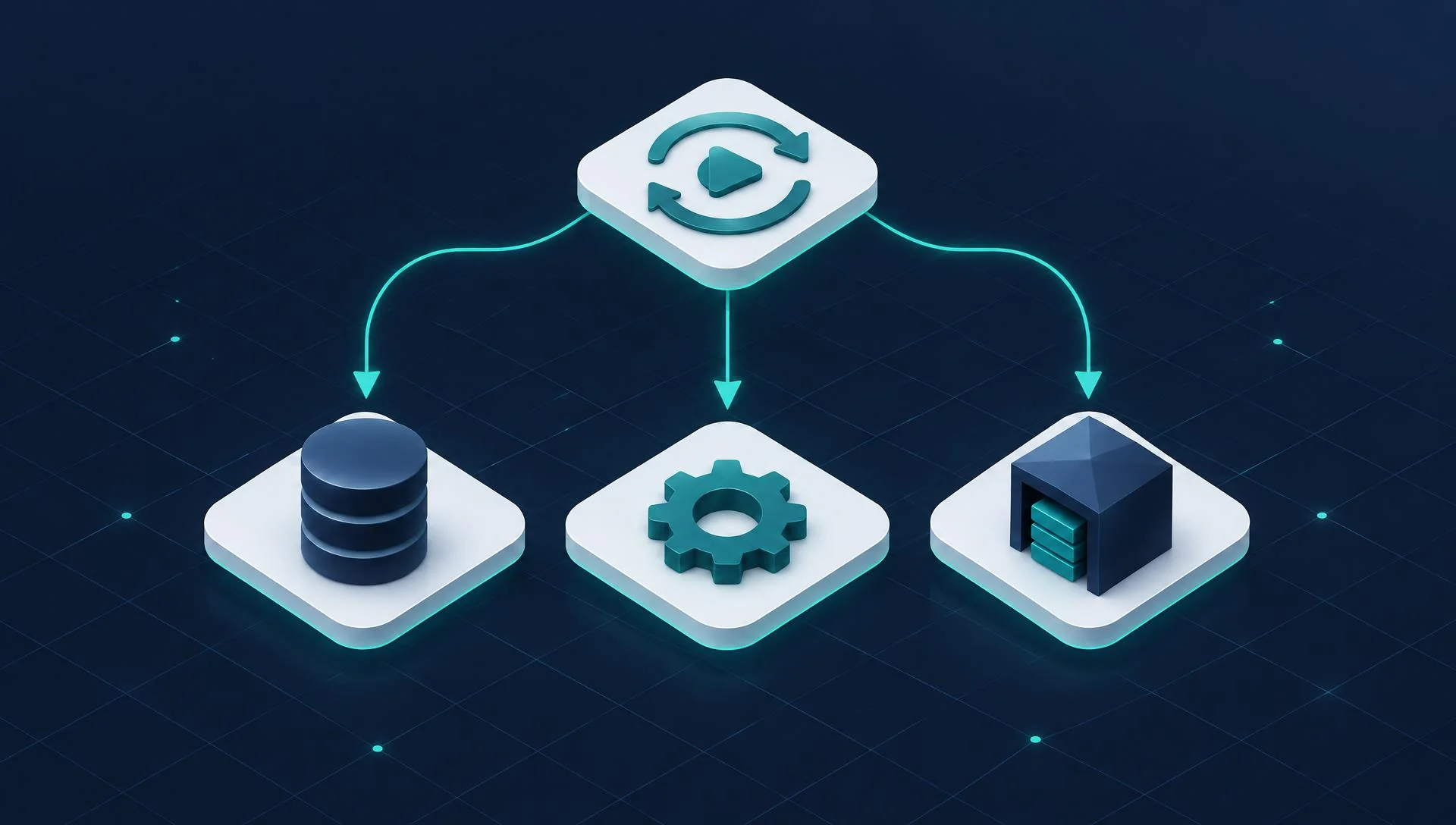
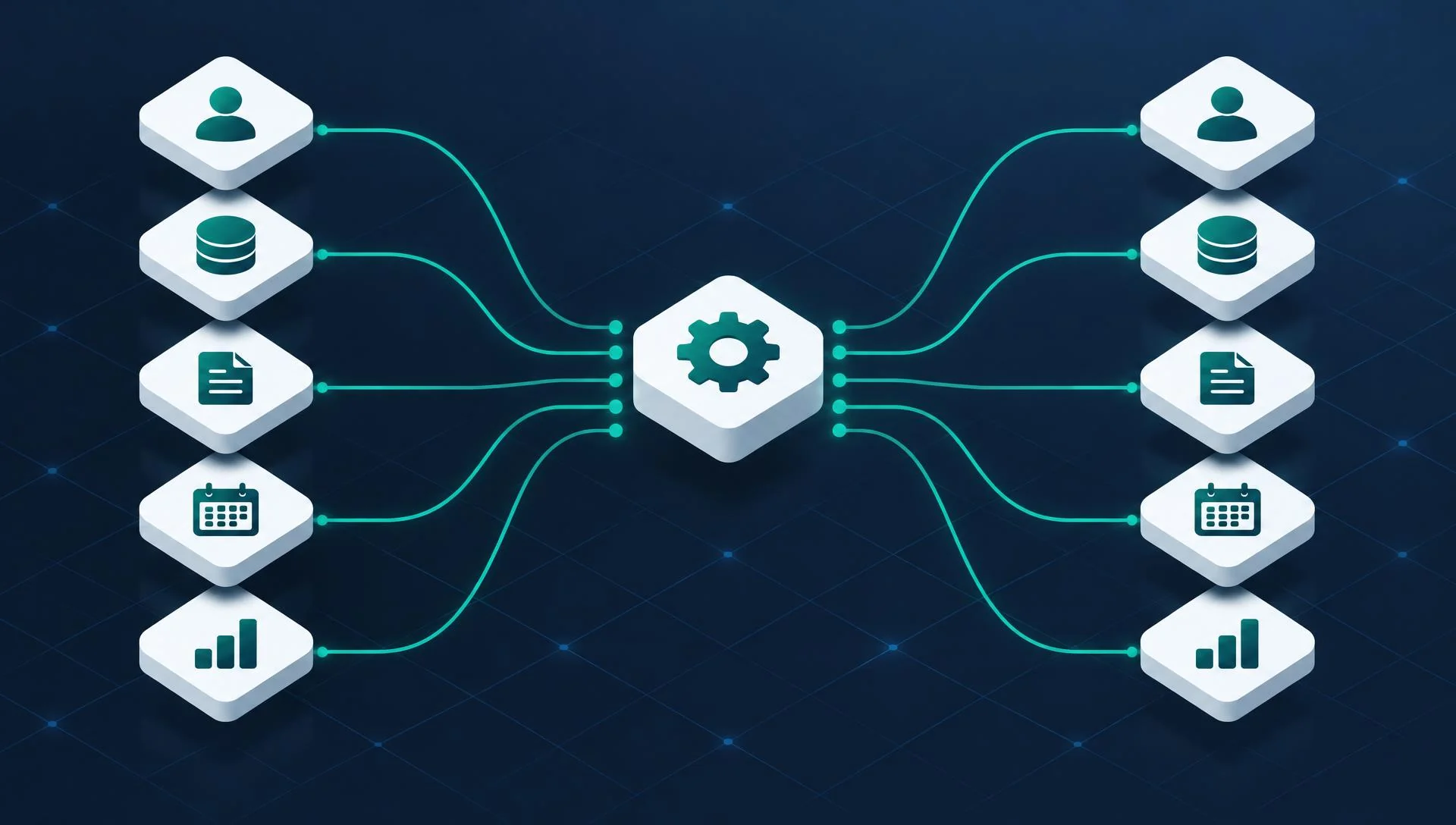
A data pipeline is a broader concept encompassing any series of data processing steps. Pipelines can include:
- ETL processes
- ELT (Extract, Load, Transform) processes
- Real-time streaming
- Event processing
- API integrations
- Machine learning model scoring
- Any sequence of data operations
Data pipelines are the infrastructure that moves and processes data, while ETL is one specific pattern within that infrastructure.
Key Differences
| Aspect | ETL | Data Pipeline |
|---|---|---|
| Scope | Specific pattern | Broad concept |
| Transformation | Before load | Flexible timing |
| Processing | Typically batch | Batch, streaming, or hybrid |
| Use Cases | Data warehousing | Any data movement/processing |
| Complexity | Well-defined stages | Variable architecture |
When to Use ETL
ETL remains valuable when:
- Loading data into traditional data warehouses
- Transformation logic is complex and well-defined
- Data must be cleansed before storage
- Processing volumes fit batch windows
- Compliance requires transformation before persistence
When to Use ELT
Modern data architectures often prefer ELT (Extract, Load, Transform):
- Cloud data warehouses can perform transformations efficiently
- Raw data preservation is valuable
- Transformation requirements evolve
- Processing power is abundant in the target system
When to Use Streaming Pipelines
Real-time requirements call for streaming architectures:
- Low-latency requirements (seconds, not hours)
- Event-driven processing
- Continuous data ingestion
- Real-time analytics and dashboards
Building Modern Data Pipelines
Modern organizations typically need multiple pipeline patterns:
- ELT for analytics: Load data to cloud warehouses, transform as needed
- Streaming for real-time: Process events immediately for operational use
- ETL for compliance: Transform sensitive data before storage
- API integrations: Connect systems through services
The key is choosing the right pattern for each use case rather than forcing everything through a single approach.
Data Pipeline Best Practices
Design for Observability: Build monitoring, logging, and alerting into pipelines from the start.
Implement Testing: Validate data at every stage of the pipeline.
Manage Dependencies: Understand and control how pipeline components interact.
Plan for Failure: Design for idempotency and recoverability.
Document Thoroughly: Capture lineage, business logic, and operational procedures.
Conclusion
ETL is a proven pattern with continued relevance, especially for traditional data warehousing. But modern data architecture requires thinking beyond ETL to the broader concept of data pipelines. Understanding both concepts—and when to apply each—is essential for building effective data infrastructure.
Frequently asked questions
Is every data pipeline an ETL pipeline?
No. A data pipeline is a sequence of data movement or processing steps. ETL is a particular pattern that transforms extracted data before loading the target. Other pipelines may load before transformation, process events or combine several patterns. Choose the design from the workload and business requirements.
How should a team choose between ETL and ELT?
Consider where transformation should run, which data may be persisted, source and target capabilities, operating cost and delivery requirements. ETL transforms before target loading; ELT loads before the relevant transformations. Either approach still needs approved mappings, ownership and validation. The acronym does not determine whether the resulting data is correct.
Do streaming pipelines still need reconciliation?
Where the business requires population and value agreement, streaming delivery still needs appropriate reconciliation. Define an observation window, late-arrival treatment and expected update or deletion behavior. Low delivery latency and a healthy event processor do not establish that the target contains every required business record correctly.