You have run the pipeline. The logs are clean. Every transformation executed as designed. Then, three weeks into production, a senior analyst flags a discrepancy in the financial close. A compliance review surfaces missing transaction records. An S/4HANA cutover that cleared every validation gate is now generating support tickets.
The pipeline did not fail. The data did.
This is the failure pattern that hits experienced data teams. Not because they confuse ETL testing with data reconciliation, but because they trust the wrong layer of validation at the wrong stage of the migration.
Senior ETL developers know the definitions. SAP consultants know the stakes. Heads of Data Engineering know the cost. What they need is a precise diagnostic for where coverage breaks down and why it keeps breaking down even on mature teams.
Where the Real Gap Lives
Most senior practitioners understand the conceptual difference between ETL testing and data reconciliation long before they reach an enterprise migration. The problem is not definitional. It is architectural.
Pipeline-level ETL checks tend to fail loudly. A broken connection, failed mapping, or invalid transformation step usually appears in logs. The feedback loop is tight, and the failure is visible.
Data reconciliation failures are quieter. A record dropped during extraction may not announce itself. A rule that produced the right output in ECC but calculates differently in S/4HANA may not trigger a pipeline alert. An aggregate that balances at the summary level can still hide record-level discrepancies.
That asymmetry is the real gap. Strong ETL testing discipline still leaves risk when validation coverage stops at execution, schema, or aggregate checks. The question is where each layer can fail silently and how to build coverage around it.
Three Advanced Blind Spots
Blind Spot 1 - Schema Mapping Passes. Business Logic Does Not.
Metadata-driven auto-mapping solves a real problem. It reduces the manual effort of wiring source and target schemas, accelerates test case generation, and handles structural equivalence reliably at scale. For teams migrating from DB2, Teradata, legacy data warehouses, or SAP ECC, it is a genuine productivity unlock.
What it does not prove is business logic equivalence. In SAP migrations, that is where expensive failures often live.
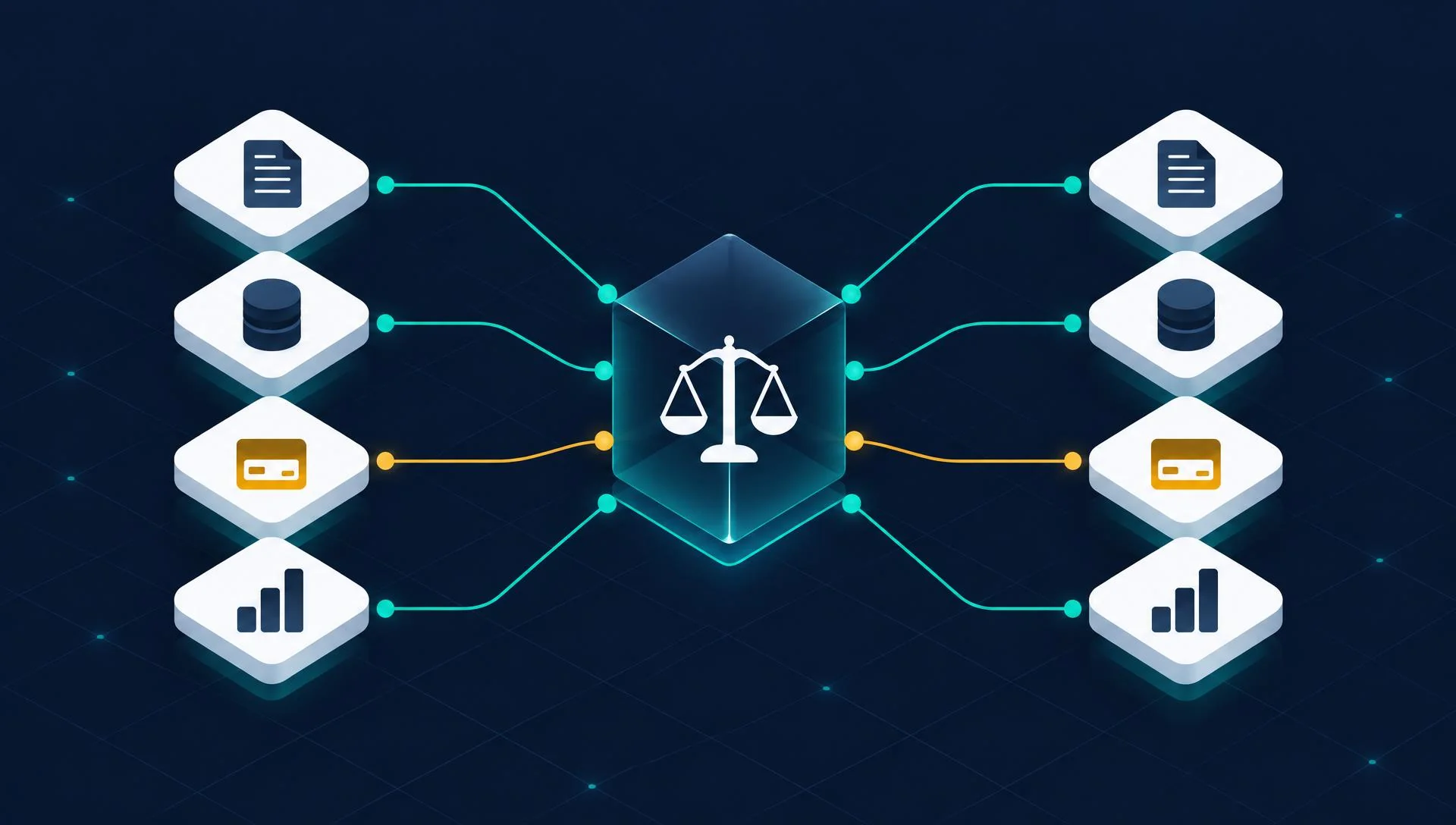
Custom ABAP, exits, BAdIs, pricing routines, tax determination logic, intercompany rules, and configuration-driven calculations do not automatically become semantically equivalent because the target schema maps cleanly. When these rules are rewritten or reconfigured for S/4HANA, the target data can be structurally identical to the source and still be functionally wrong. Column types match. Row counts reconcile. The financial output is incorrect.
Schema-focused or execution-level ETL testing has limited surface area here. It validates that the pipeline executed the transformation it was given. It does not, by itself, prove that the transformation preserves business intent.
Business rule validation closes that gap at the semantic layer. It confirms that financial totals, customer balances, calculated fields, and other critical outputs produce equivalent results on both sides of the migration boundary, even when the underlying logic has changed.
Blind Spot 2 - you are Reconciling at the Wrong Layer
Most enterprise teams reconcile. The problem is where they stop.
Aggregate reconciliation is the default. Total row counts match. Sum of account balances ties out. Financial totals at the report level look right. But aggregate checks do not surface offsetting errors underneath, such as inverted values that cancel each other out, or nulls defaulted to zero during transformation and absorbed into the total.
Record-level reconciliation catches more of that. A field-by-field comparison can confirm that values transferred correctly. But it still may not prove that those values mean the same thing on both sides. A customer segment code may map correctly while carrying a different business meaning in the target system. The check passes. Downstream reporting breaks.
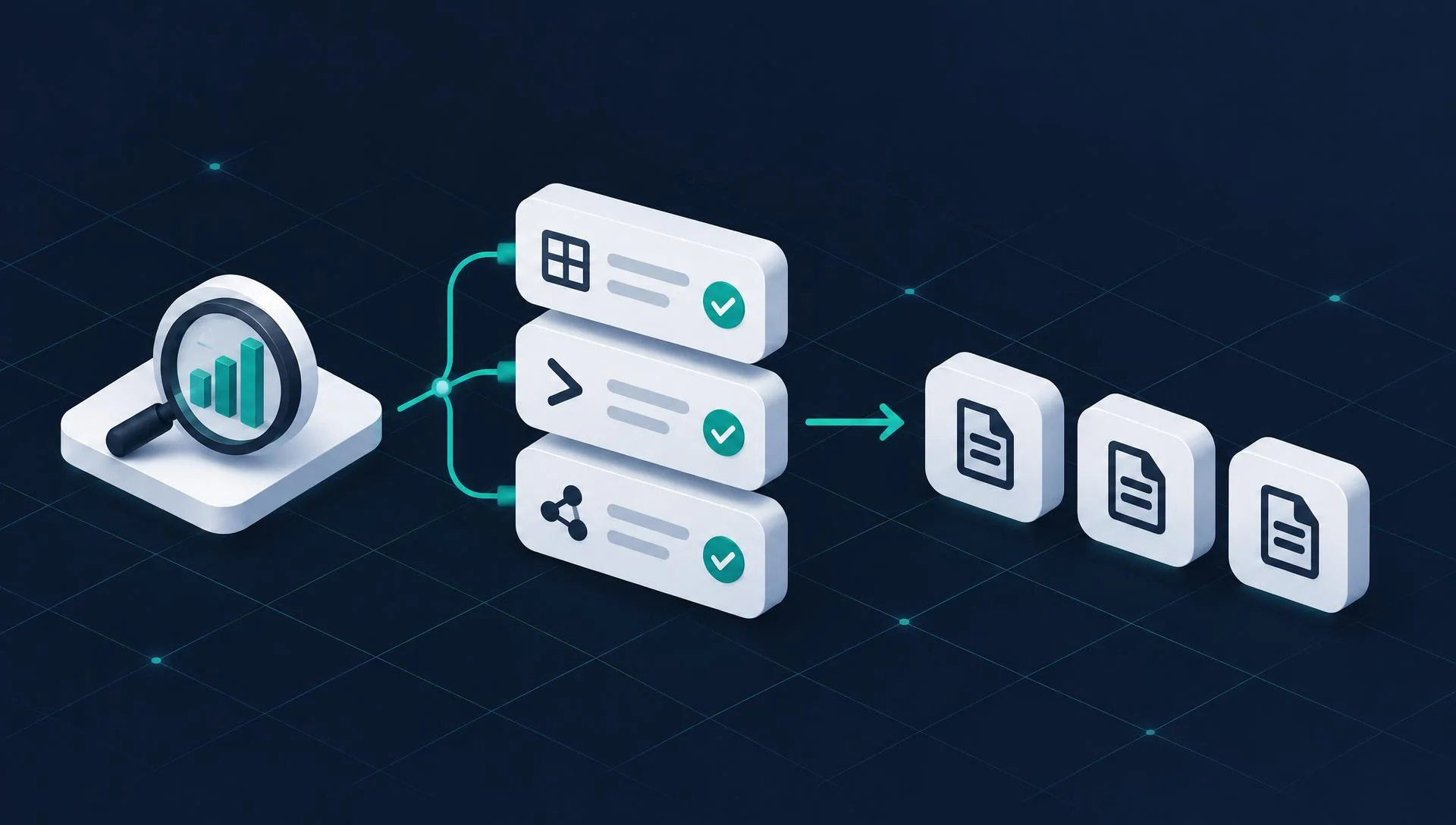
For senior teams, reconciliation coverage is not binary. It is layered. Aggregate checks provide summary confidence. Record-level checks provide completeness. Business rule validation provides semantic equivalence. Running only one or two layers may look efficient during planning, but it creates a coverage gap that usually surfaces at the worst possible moment.
Blind Spot 3 - Reconciliation as a Gate, Not a Pipeline
Many teams treat reconciliation as a checkpoint. They run it at the end of a migration wave, confirm the data looks right, get sign-off, and move on. For a single clean cutover, that may be manageable. For multi-wave ERP migrations, S/4HANA cutovers, and large-scale ETL rebuilds, it becomes a structural problem.
Each wave carries dependencies from the previous one. Master data loaded in wave one feeds transactional data in wave two. If an issue in wave one goes undetected, such as incorrect customer segment assignments or defaulted GL account values, it propagates into every later wave that references that data.
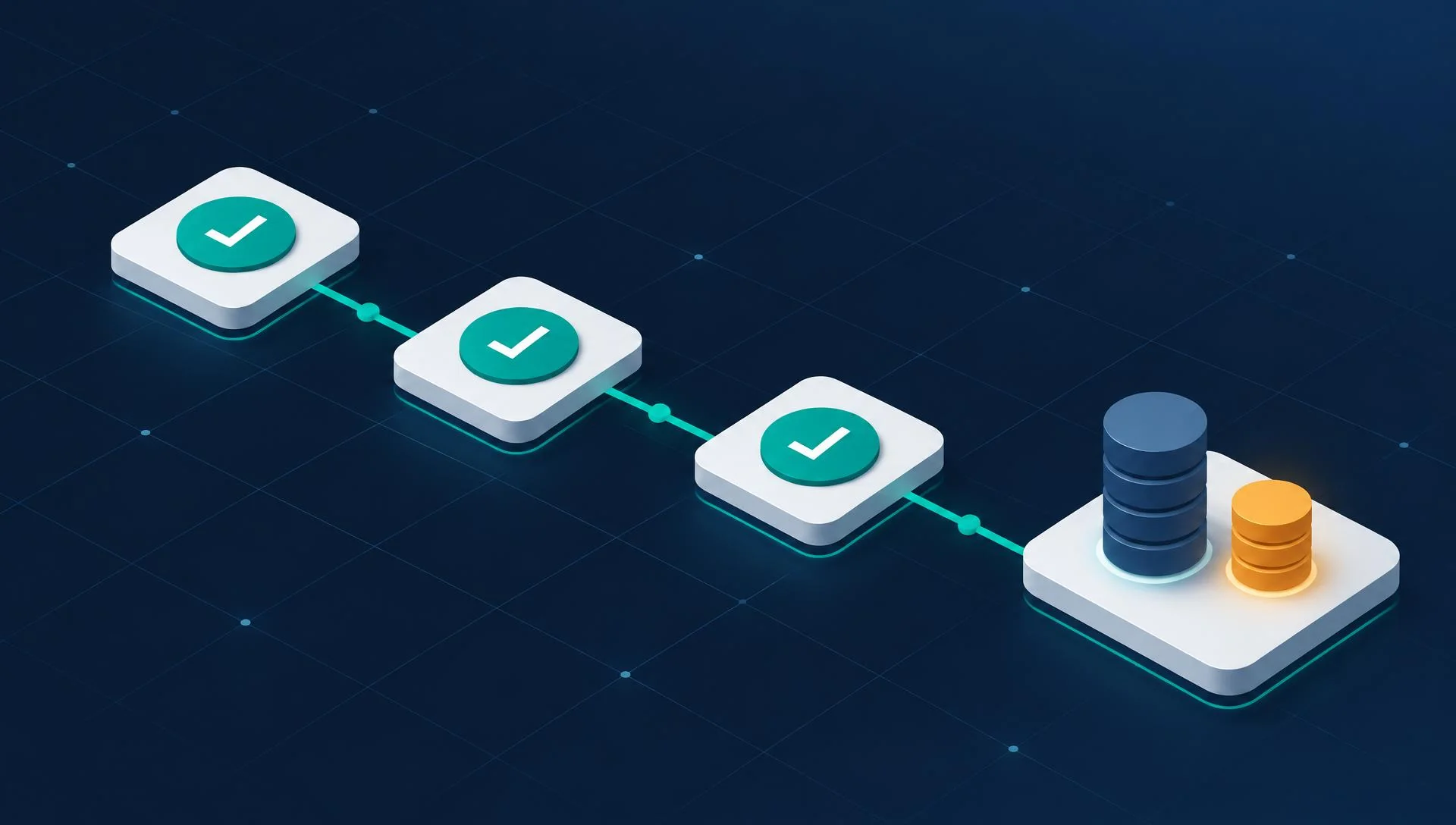
By the time a post-migration reconciliation gate catches it, the error has compounded across weeks of incremental loads. The root cause is harder to isolate. The remediation scope is larger. The fix is continuous reconciliation after extraction, transformation, and load cycles. Catching a bad batch in wave one can take hours. Catching it in wave four can take weeks.
Three advanced blind spots - and where each breaks coverage
These aren't beginner mistakes. They're architectural decisions that look correct under pressure.
Schema mapping passes. Business logic doesn't.
ABAP custom logic doesn't migrate with the schema - calculated fields can be structurally correct and semantically wrong
Confirms the transformation executed - not that it preserved business intent
Business rule validation at the semantic layer - financial totals, calculated fields, and derived values on both sides of the migration boundary
You're reconciling at the wrong layer.
Aggregate checks miss offsetting errors; record-level checks miss semantic drift - most teams pick one layer and call it done
Validates pipeline execution - not which reconciliation layer is sufficient for the data at hand
Layered reconciliation strategy - aggregate for summary confidence, record-level for completeness, semantic for equivalence
Reconciliation as a gate, not a pipeline.
Post-wave sign-offs let errors compound across wave dependencies - by wave four, the root cause is buried and remediation scope is large
Tests each wave in isolation - doesn't account for errors propagating forward through wave dependencies
Continuous reconciliation embedded at every extraction, transformation, and load stage - not a post-migration gate
What a mature Validation Architecture looks like
Most data teams have some form of ETL testing in place. Fewer have reconciliation built beyond the aggregate layer. Even fewer have schema validation, business rule validation, and audit-ready evidence running continuously across waves, environments, and platforms.
A mature validation architecture operates across three layers, and each one answers a question the layer above it cannot.
The schema layer confirms structural equivalence. Row counts, column mappings, data type compatibility, mandatory fields, and null handling are checked before bad structure becomes bad reporting. This layer is necessary, but it is not sufficient.
The business rule layer confirms semantic equivalence. Calculated fields produce the same intended output on both sides. Rewritten rules, such as ABAP routines, pricing logic, and intercompany calculations, are tested for functional consistency, not just successful execution.
The audit trail layer confirms traceability. Every record has a verifiable path from source to destination. Every discrepancy is logged with field-level detail. Every wave has reconciliation evidence that compliance and governance teams can review. For a Head of Data Engineering, this changes the audit conversation from reactive evidence gathering to proactive proof.
A mature validation architecture - three layers, each answering what the layer above cannot
Most teams have Layer 1. Fewer have Layer 2. Almost none have all three running continuously.
Does the data match structurally?
Does the data mean the same thing?
Can you prove it end-to-end?
Where the stakes are highest
The three-layer validation gap is not theoretical. In industries running complex ERP migrations or large-scale data pipelines, the consequences are operational, financial, and regulatory.
In Financial Services, core banking migrations carry transaction history, ledger balances, and regulatory reporting data. A validation gap in interest calculation logic, fee treatment, or intercompany reconciliation may surface in a submission, close process, or audit review.
In Insurance, claims and policy systems often contain years of accumulated transformation rules. Aggregate policy reconciliation can miss record-level errors that create incorrect claims payouts or reporting defects.
In Pharma, GxP-regulated systems and electronic records require reliable traceability. Clinical trial data, batch records, and submission datasets need evidence that shows what moved, what changed, and what was validated. A pipeline that ran correctly is not the same as a dataset that is audit-ready.
In Manufacturing and Automotive, ERP migrations carry bill of materials data, supplier master records, inventory positions, and production schedules. A reconciliation gap in wave one can propagate into procurement, production planning, and customer delivery.
Where the stakes are highest - by industry
Each industry maps to the validation layer most likely to fail - and most expensive when it does.
Financial Services
Insurance
Pharma
Manufacturing & Automotive
The Diagnostic, Not the Definition
The gap between ETL testing and data reconciliation is not something senior data teams need explained from the ground up. What they need is a diagnostic for where coverage breaks down.
At enterprise scale, the failures are rarely loud. They do not always throw errors. They do not always stop pipelines. They show up in a financial close that does not balance, a compliance review that surfaces missing records, or a wave four remediation exercise that should have been a wave one fix.
The three blind spots covered here - business logic drift at the schema layer, reconciliation at the wrong coverage level, and reconciliation treated as a post-migration gate - are not edge cases. They are architectural decisions made under project pressure that look correct until they are not.
Getting this right means running validation as a continuous architecture, not a sequential checklist. Schema coverage gives you structural confidence. Record-level reconciliation gives you completeness. Business rule validation gives you semantic equivalence. A continuous audit trail gives you evidence to stand behind all three.
Teams that get this right do not rebuild their validation framework for every migration. They invest in reusable tooling that works across waves, environments, and platforms. If your team is still stitching together schema checks, reconciliation scripts, and audit evidence manually, RightData DataTrust gives you a reusable validation layer for ETL testing, source-to-target reconciliation, business rule validation, and data migration testing with audit-ready reporting.
Frequently asked questions
How can ETL testing pass while data reconciliation fails?
The test suite may cover execution, schemas or selected transformations without covering the complete expected business population and outputs. Reconciliation can then reveal missing keys, incorrect mappings or unexplained value differences. Review what the passing tests actually asserted before treating the result as evidence that every source-to-target requirement was satisfied.
Can ETL testing include business rules and reconciliation?
Yes. A comprehensive ETL test suite can include business-rule expectations, key-population checks and source-to-target reconciliation. The gap comes from incomplete coverage, rather than an absolute boundary between the terms. Define the requirements and evidence for each control so a passing pipeline status cannot substitute for untested business outcomes.
Why are aggregate checks insufficient for some migrations?
Equal totals can hide missing records, duplicated records or offsetting value errors. Where individual transactions matter, compare the eligible key population and material values at the approved grain. Retain aggregate controls as complementary evidence. A record-level comparison also needs correct mappings and business definitions to establish the intended result.
When should reconciliation run during a migration?
Run it against the baseline load, relevant migration waves, final changes before cutover and the stabilization period according to business risk. Align source and target versions and cutoff times. Repeat affected checks after corrections or mapping changes, retaining previous failures and rerun references so reviewers can understand the acceptance decision.
What evidence should a team bring to a DataTrust evaluation?
Bring a defined source-to-target contract, representative data, known missing records, incorrect transformed values and legitimate expected differences. Ask DataTrust to demonstrate the supported validation and reconciliation workflow for that scope. Review connection support, execution behavior, exception investigation and retained evidence instead of relying only on a pass percentage.