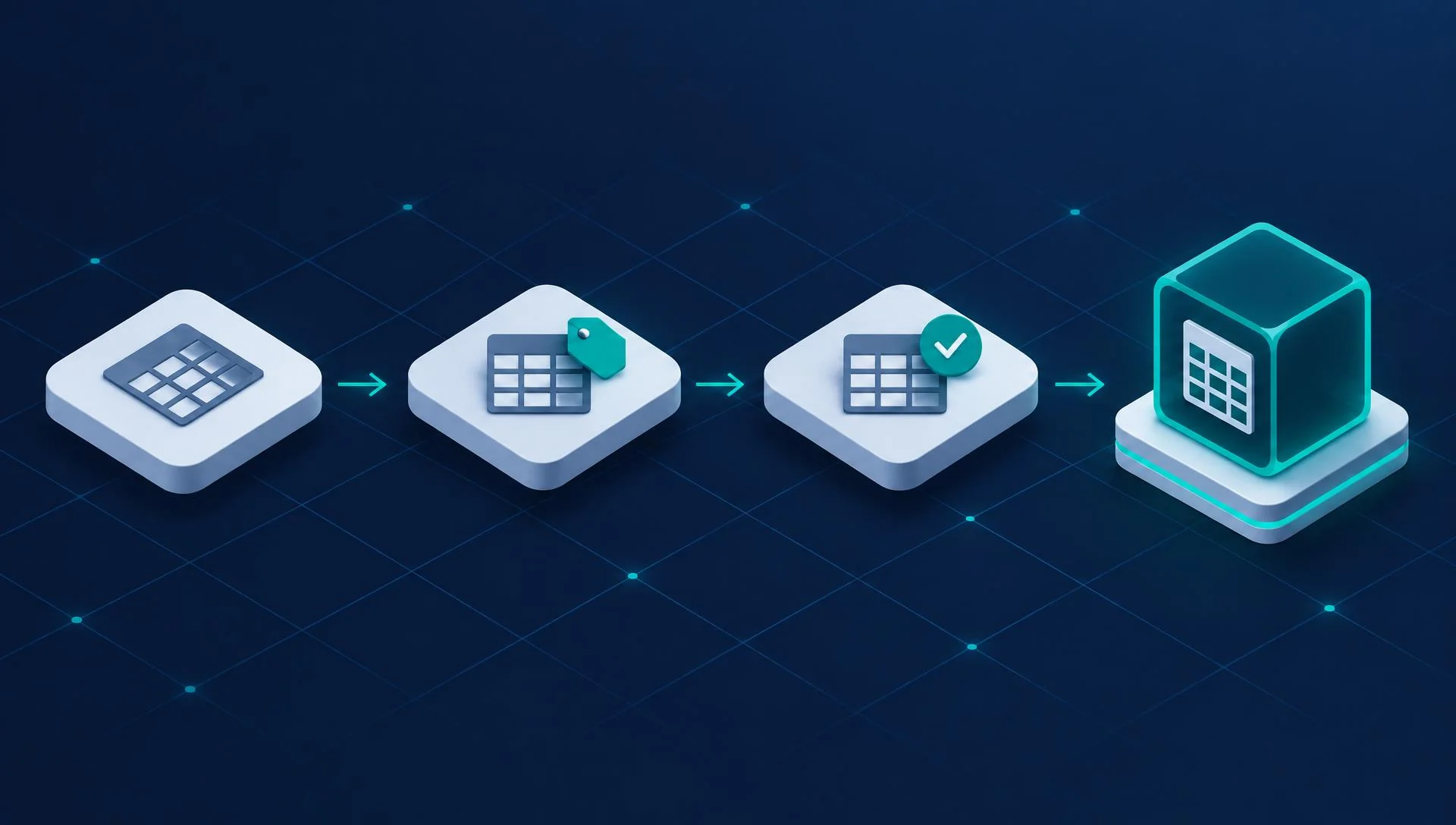
Transforming a dataset into a data product requires deliberate effort across multiple dimensions. This guide walks through the journey of productizing your data assets for maximum business value.
The Dataset to Data Product Journey
Most organizations have abundant datasets but few true data products. The difference lies not just in the data itself, but in how it's packaged, managed, and delivered to consumers.
Step 1: Identify and Assess
Start by identifying datasets with high reuse potential. Ask:
- How many teams or use cases currently use this data?
- What is the business value of the decisions it supports?
- How much effort is currently spent preparing it for use?
- What quality issues exist, and how are they handled?
Prioritize datasets where productization will deliver the most value.
Step 2: Define Ownership and Accountability
Every data product needs a clear owner—typically a product manager or data owner who is accountable for:
- Understanding consumer needs
- Defining quality standards
- Managing the product roadmap
- Communicating changes
Without clear ownership, data products become orphaned assets that degrade over time.
Step 3: Establish Quality Standards
Define measurable quality dimensions:
- Accuracy: How correct is the data?
- Completeness: Are expected values present?
- Timeliness: How fresh is the data?
- Consistency: Do values align across sources?
- Validity: Does data conform to expected formats?
Implement automated quality monitoring to continuously validate these standards.
Step 4: Create Self-Describing Metadata
Data products must be self-documenting:
- Business definitions for every field
- Data lineage showing sources and transformations
- Usage examples and best practices
- Known limitations and caveats
- Update schedules and SLAs
This metadata should be maintained alongside the data, not in separate documentation.
Step 5: Implement Access and Security
Design access patterns that balance usability with security:
- Standard APIs or access protocols
- Role-based access controls
- Audit logging of all access
- Clear data classification
Make it easy for authorized users to consume data while maintaining governance.
Step 6: Enable Discovery and Consumption
Publish the data product in a catalog where consumers can:
- Search and browse available products
- Understand what data is available
- Request access and understand terms
- Provide feedback and suggestions
Step 7: Monitor and Improve
Continuously monitor:
- Data quality metrics
- Consumer usage patterns
- Performance and availability
- Consumer satisfaction
Use this feedback to improve the product over time.
The Transformation Mindset
The biggest shift in moving from datasets to data products is mindset. Data producers must think like product managers—understanding consumer needs, delivering value, and continuously improving. This cultural shift, combined with the right processes and tools, is what enables successful data products.
Frequently asked questions
What must be ready before publication
The owner should establish the consumer purpose, meaning, interface, relevant checks, access behavior, support route, and known limitations, then make a documented release decision.
Who approves a data product
Approval responsibilities depend on the organization. They can include the product owner, data owner, security or access reviewer, and accountable business consumer. Make those roles explicit.
When should a product be retired
Review retirement when its purpose is no longer needed, its source or controls can no longer support the use, or an approved replacement is available. Communicate the transition to affected consumers.