In today's data-driven world, the emergence and necessity of data products are directly tied to the exponential growth in data volume, the increasing complexity of enterprise data landscapes, and the critical role data now plays in driving strategic decisions. As organizations become more reliant on data to power their operations, analytics, innovation, and customer experiences, the expectations around the availability, accuracy, accessibility, and usability of data have significantly evolved.
Traditional approaches to delivering data—such as manual data extracts, ad hoc reporting, isolated spreadsheets, siloed data pipelines, or static dashboards—are no longer sufficient. These legacy models are often fragmented, inconsistent, and highly dependent on specialized IT or data engineering teams. They struggle to keep pace with the growing demand for real-time, trusted, and business-ready data by analysts, data scientists, product managers, and even automated systems.
Moreover, these conventional models typically lack scalability, governance, and reusability, leading to duplicated efforts, data quality issues, and significant delays in generating insights. As organizations strive for agility, democratized data access, and tighter compliance with data regulations, they require a new paradigm—one that treats data not as a one-time deliverable, but as a well-defined, reusable, discoverable, and governed product.
This is where data products come in. They are designed to deliver high-quality, fit-for-purpose, and value-generating datasets in a way that is consistent, scalable, and aligned with business needs. Data products encapsulate data, logic, metadata, documentation, and access control into cohesive units that can be easily discovered, consumed, and trusted by a wide range of users across the organization.
Data Products are a Cultural Shift from Data Silos to Data Democratization
Let's look at 2 stories of two brothers John and Sean. Both work at the same role in two different organizations.
John's Story: The Struggle with Data Silos
John is the Head of Procurement at a large retail chain operating across North, South, and Central regions. Every week, he's responsible for making critical buying decisions—like how much inventory to stock, which suppliers to negotiate with, and how to react to seasonal trends. But there's a problem: John is flying blind.
John tries to understand regional sales trends, but each team—Sales, Marketing, Finance—maintains its own spreadsheets and dashboards. The numbers often don't match. Sales says the South region is booming, Finance reports a dip, and Supply Chain has a different version altogether. He spends hours in meetings trying to figure out which numbers are "correct." No one really knows.
John needs data about supplier performance and excess inventory. So, he raises a request with the central data team. The ticket is acknowledged… then waits in a queue. Two weeks pass before he gets a partial report—missing a few key columns. He emails back for clarification and waits again.
When John finally gets the raw data, it's a mess. Different product codes, inconsistent region names, missing values. His team spends days just cleaning and aligning the data, delaying decision-making. He feels like he's chasing clarity instead of making progress.
John joins a leadership call to review quarterly performance. He confidently shares his procurement insights—only to be challenged by the CFO, who presents completely different numbers. Embarrassed and confused, John realizes that each department has been calculating KPIs their own way. The meeting ends with more questions than answers.
John says – "I have data all around me, but no way to trust it, access it quickly, or act on it with confidence."
Sean's Story: Empowered by Data Products
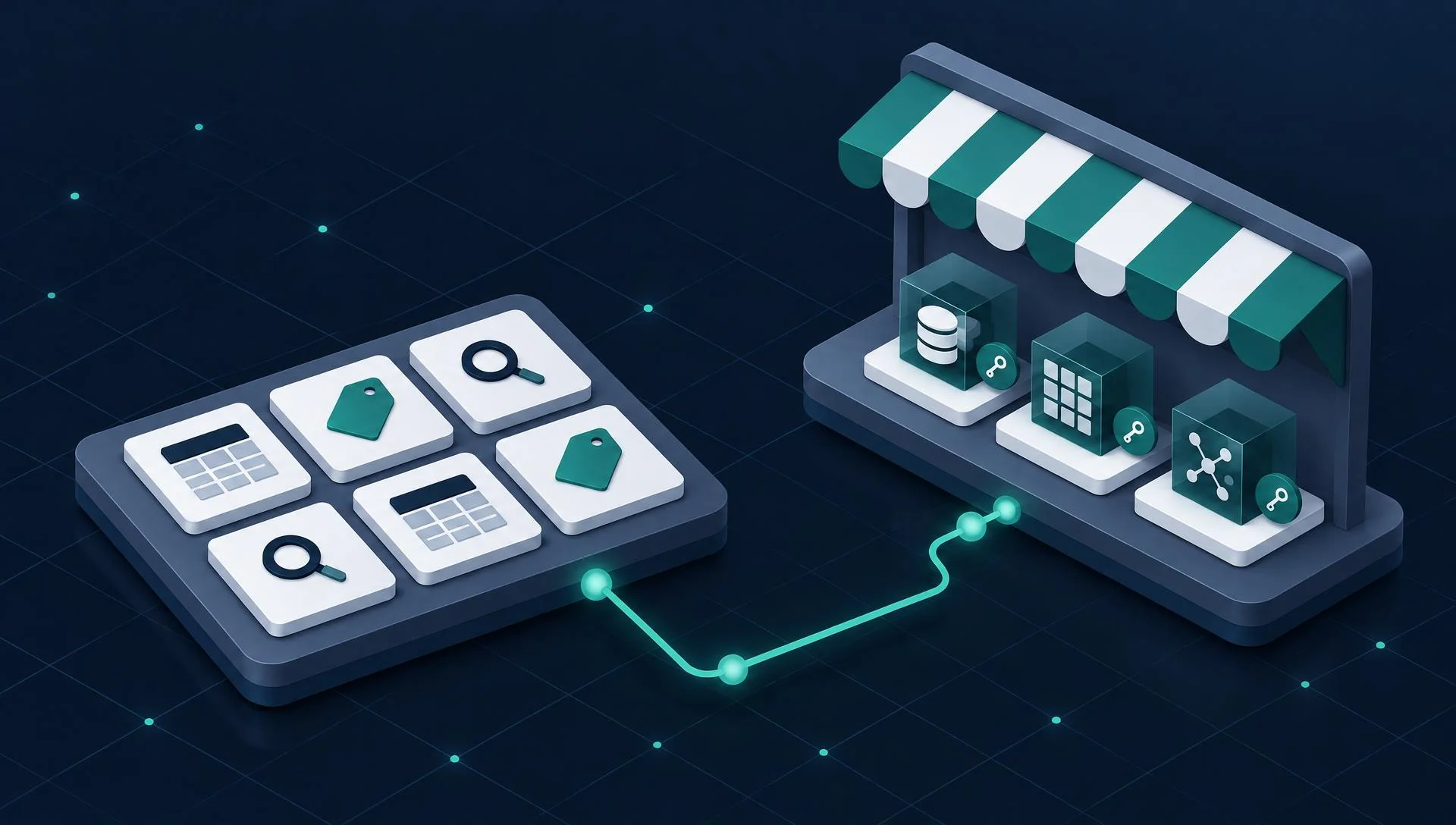
On the other hand, Sean works at a company that has embraced data products. He opens a company-wide Data Marketplace from his laptop. He searches for "Supplier Performance" and instantly finds a certified data product created by the Supply Chain team. The description is clear, the schema is documented, and there's even a data quality score. He subscribes with one click.
Sean doesn't need to raise a ticket or wait for IT. The data product is designed to be self-serve, refreshed daily, and governed by the data owner. If he has questions, the owner is listed and reachable.
The regional sales data Sean pulls is already harmonized. The product codes are standardized, region names are consistent, and there's a glossary explaining each metric. He skips the cleanup and goes straight to analysis.
When Sean joins the leadership call, everyone references the same dashboard, powered by the same data products. Sales, Finance, and Supply Chain are aligned. There's no confusion—just collaboration.
Sean says – "I don't chase data anymore—I trust it, access it instantly, and make decisions with confidence."
The Data Adoption Phases
Phase 1: Ideation – Understand the data need and define the data product scope.
Phase 2: Sourcing – Identify, connect, and ingest data from source systems.
Phase 3: Preparation – Cleanse, transform, and standardize the data.
Phase 4: Packaging – Define schema, metadata, quality rules, and documentation.
Phase 5: Deployment – Publish the data product to the marketplace with access controls.
Phase 6: Virtualization – Enable consumption through APIs, dashboards, or direct queries.
Why RightData's DataMarket?
RightData's DataMarket is a next-generation Data Products Marketplace that enables:
- Federated self-service access to structured, semi-structured, and unstructured data
- Data Productization of enterprise data sources
- Business-friendly search, request, and consumption of trusted data assets
- AI-powered discovery and chat-based exploration
- Built-in governance, lineage, and quality scoring
DataMarket helps enterprises close the governance gap and enable true data democratization—making Sean's story a reality for every organization.
Frequently asked questions
Does data democratization mean everyone can access every dataset?
No. It means helping appropriate users discover, understand and use data through an approved process. Permissions still depend on the person, data and allowed purpose. Make the available next action clear: discovering metadata, requesting access and consuming underlying data are different steps and can have different authorization requirements.
What needs to accompany a dataset before it becomes a reusable data product?
Define its intended users and purpose, accountable owner, business meaning, grain, refresh expectations, relevant quality requirements and supported access path. Document important exclusions and limitations. The product should help a consumer decide whether the data fits the task and how to obtain permitted use without relying on undocumented knowledge.
Who is responsible when a data product’s definition or quality changes?
The accountable owner should coordinate the change with stewards, source teams and affected consumers. Record the revised definition or requirement, effective condition, affected assets and review decisions. Technical teams supply implementation evidence, while business owners approve the meaning and consequences relevant to the product’s intended use.
How should a team measure whether a data marketplace improves adoption?
Measure completed consumer tasks, time to identify suitable products, clarification requests, approved access completion and reuse within a defined period. Review failed searches and unsuitable selections separately. Visits, subscriptions or a high displayed quality score alone do not establish that users completed the intended decision correctly.
How does DataMarket support governed data democratization?
DataMarket supports discovery and governed consumption of data products, including natural-language exploration. Evaluate it with a representative question, approved business definitions and users with different access scopes. Confirm the supported sources and permitted operations for the configuration rather than assuming every user receives unrestricted access or that all consumption is automatic.