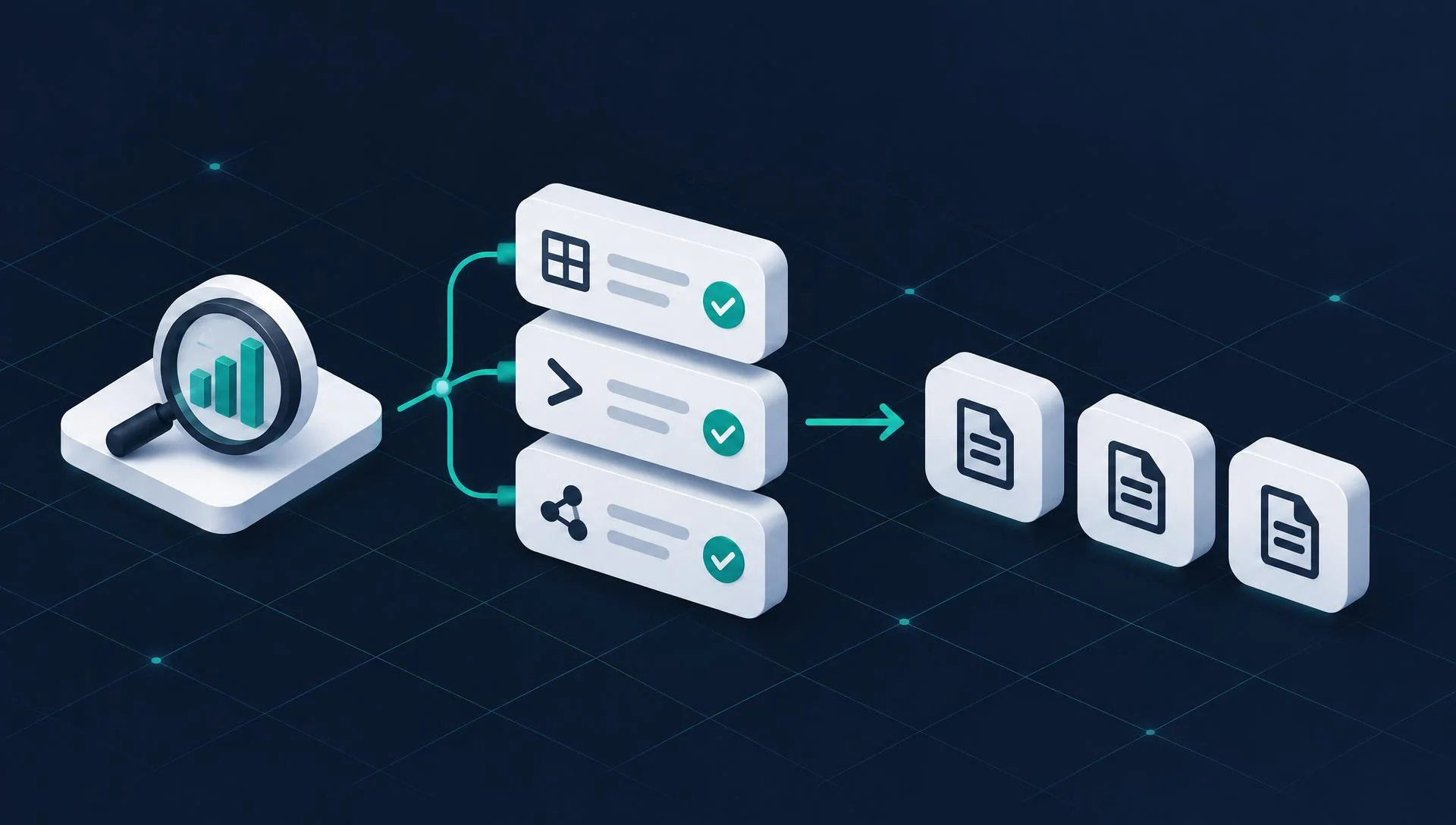
Data quality doesn't happen by accident. It requires deliberate strategies and ongoing commitment. These five proven strategies help organizations build and maintain trusted data.
Strategy 1: Establish Data Ownership
Why It Matters: Data without ownership is data without accountability. When no one is responsible, quality degrades.
How to Implement:
- Assign clear owners for every critical data domain
- Define ownership responsibilities: quality, access, lifecycle
- Empower owners with tools and authority
- Include data quality in performance objectives
- Create governance forums for cross-domain issues
Success Metrics: Every critical data asset has a named owner with defined responsibilities.
Strategy 2: Implement Data Profiling
Why It Matters: You can't improve what you don't understand. Profiling reveals the actual state of your data.
How to Implement:
- Profile data sources before integration projects
- Analyze completeness, uniqueness, consistency patterns
- Document data distributions and anomalies
- Compare profiles over time to detect drift
- Use profiling to inform quality rules
Success Metrics: All critical data sources are profiled regularly with documented findings.
Strategy 3: Define and Enforce Quality Rules
Why It Matters: Explicit rules make quality requirements visible and testable.
How to Implement:
- Document quality expectations for each data element
- Implement automated validation against rules
- Alert stakeholders when rules are violated
- Track compliance metrics over time
- Continuously refine rules based on learnings
Success Metrics: Critical data has defined rules with automated monitoring and documented compliance rates.
Strategy 4: Fix Quality at the Source
Why It Matters: Fixing data downstream is expensive and often incomplete. Prevention beats remediation.
The source-side principle gets harder in asset-heavy operations, where the people generating the data are technicians on a plant floor, not analysts at a desk. If the capture tool is a clipboard, a legacy desktop application, or a form no one wants to fill out, quality erodes before governance ever sees the record.
MaintainX addresses this by making the frontline system of record something technicians actually use: a mobile-first platform where work orders, asset history, parts usage, and PM completions are captured in the moment, with AI turning voice notes and manuals into structured procedures. Customer adoption averages 98%, which is what keeps maintenance and reliability data trustworthy enough for the profiling, rules, and monitoring practices above to produce meaningful signal rather than noise from partial records.
How to Implement:
- Implement validation in data entry systems
- Provide immediate feedback to data creators
- Train staff on data quality importance
- Design systems that prevent common errors
- Track issue origins to address root causes
Success Metrics: Reduction in quality issues requiring downstream correction.
Strategy 5: Monitor Continuously
Why It Matters: Data quality is not a project-it's an ongoing discipline. Continuous monitoring catches issues early.
How to Implement:
- Deploy automated quality monitoring across pipelines
- Create dashboards for quality visibility
- Implement alerting for quality degradation
- Track trends to identify systemic issues
- Review quality metrics in regular governance forums
Success Metrics: Real-time visibility into data quality with proactive alerting.
Putting It All Together
These strategies work together:
- Ownership ensures someone cares about quality
- Profiling reveals the current state
- Rules define what good looks like
- Source fixes prevent issues from entering
- Monitoring catches what gets through
Common Pitfalls to Avoid
Treating Quality as IT's Problem: Data quality is a business concern requiring business engagement.
Focusing Only on Detection: Finding issues isn't enough—you must remediate and prevent.
Ignoring Root Causes: Repeatedly fixing symptoms without addressing causes wastes resources.
Underinvesting in Tools: Manual quality management doesn't scale. Invest in automation.
Measuring the Wrong Things: Metrics should tie to business impact, not just technical compliance.
Conclusion
High-quality data is a competitive advantage. Organizations that implement these five strategies systematically will build the trusted data foundations that enable confident decision-making and successful digital transformation.
Frequently asked questions
Which data quality strategy should a team implement first?
Start with one important consumer decision and assign an accountable owner. Define the relevant population and consequences of failure, then profile the data and specify appropriate controls. This gives ownership, profiling and rules a concrete purpose instead of creating a large inventory of checks with no clear business priority.
How do profiling and approved quality rules work together?
Profiling reveals observed patterns, missing values and possible anomalies. Approved rules state what the business requires. Use profile findings to propose checks, then review their meaning, scope and valid exceptions with the owner. A pattern found in historical data is evidence to consider, rather than an automatic requirement.
How should a team know whether its quality strategy is working?
Track performance against defined critical requirements, repeated failures, unresolved exceptions and the effect on the consumer task. Retain consistent populations and observation windows when comparing results. Report execution failures separately from data defects. More rules or a higher average score alone do not establish a better business outcome.