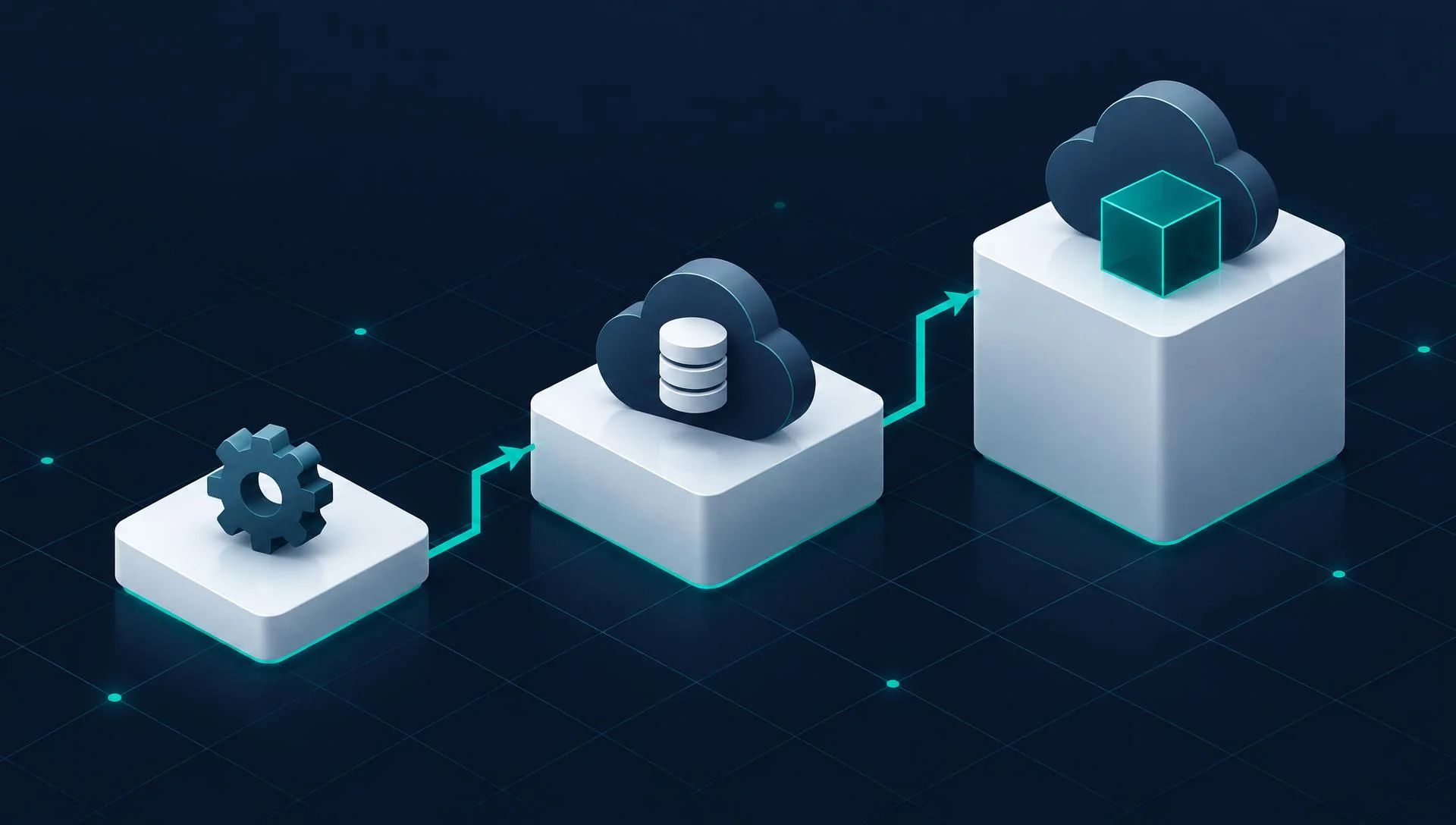
The modern data stack has evolved significantly over the years. From traditional ETL to ELT and now ELTT, data processing paradigms continue to adapt to new technologies and requirements.
The ETL Era (1990s-2010s)
Extract, Transform, Load dominated the data warehousing landscape:
How it Worked:
- Extract data from source systems
- Transform data in a staging area using dedicated ETL tools
- Load transformed data into the data warehouse
Why It Made Sense:
- Warehouses had limited compute capacity
- Transformation before load reduced warehouse processing
- Specialized ETL tools handled complex logic
- Batch processing fit business reporting cycles
Limitations:
- Complex, monolithic ETL jobs
- Long development cycles
- Difficult to change transformation logic
- Lost raw data in transformation process
The ELT Revolution (2010s-Present)
Cloud data warehouses changed the equation:
How it Works:
- Extract data from source systems
- Load raw data directly into the warehouse
- Transform data using SQL within the warehouse
Why It Emerged:
- Cloud warehouses provide scalable compute
- Transformation in SQL is more accessible
- Raw data preservation enables flexibility
- Faster time-to-value with simpler ingestion
Key Enablers:
- Snowflake, BigQuery, Databricks, Redshift
- dbt for transformation management
- Modern ingestion tools (Fivetran, Airbyte)
- Scalable cloud compute
Benefits:
- Faster data availability
- Flexibility to transform as needed
- Version control for transformations
- Reduced infrastructure complexity
The ELTT Paradigm (Emerging)
Extract, Load, Transform, Test adds a critical dimension:
How it Works:
- Extract data from source systems
- Load raw data into the warehouse
- Transform data with documented logic
- Test data quality at every stage
Why Testing is Essential:
- Catch issues before they impact analytics
- Validate business logic automatically
- Ensure transformation correctness
- Build trust in data outputs
ELTT Components:
- Automated data testing frameworks
- Data contracts between producers and consumers
- Quality SLAs and monitoring
- Continuous integration for data
Key Differences Summary
| Aspect | ETL | ELT | ELTT |
|---|---|---|---|
| Transform Location | Staging area | Warehouse | Warehouse |
| Raw Data | Often discarded | Preserved | Preserved |
| Testing | Manual/limited | Variable | Embedded |
| Tooling | Monolithic | Modular | Modular + quality |
| Flexibility | Low | High | High |
What's Next?
The evolution continues with emerging patterns:
Streaming-First: Real-time data processing becoming default
Metrics Layer: Semantic layers for consistent business metrics
Data Products: Treating data as products with quality SLAs
AI-Powered: Machine learning for testing and validation
Choosing Your Approach
The right approach depends on your context:
- ETL: Legacy systems, specialized transformations
- ELT: Modern cloud warehousing, flexible needs
- ELTT: High-trust requirements, regulated industries
Many organizations use a combination, applying different patterns to different use cases.
Conclusion
The evolution from ETL to ELT to ELTT reflects growing emphasis on flexibility, speed, and trust. As data becomes more critical to business success, the need for tested, validated data will only increase. Organizations should embrace ELTT practices to build the trustworthy data foundations that modern analytics require.
Frequently asked questions
What does ELTT mean in this article?
This article uses ELTT to mean Extract, Load, Transform and Test, emphasizing explicit testing around the data workflow. Treat that expansion as the article’s terminology rather than a required industry standard. Define the actual test stages and acceptance criteria instead of assuming that adopting a new acronym changes coverage.
Can traditional ETL and ELT workflows also include automated testing?
Yes. Both ETL and ELT can include automated validation, business-rule checks, reconciliation and regression testing. The location of transformation does not prevent either workflow from having strong controls. Evaluate the requirements, tested populations and retained evidence instead of assuming that an older architectural label implies limited testing.
Where should testing run in an ELT workflow?
Choose checks for the relevant boundaries: extracted population, raw loading, transformed outputs and downstream consumption. Define keys, mappings, cutoffs and expected results for each. A final aggregate check may miss a defect introduced earlier, while a passing raw-load check does not establish that a later calculation is correct.