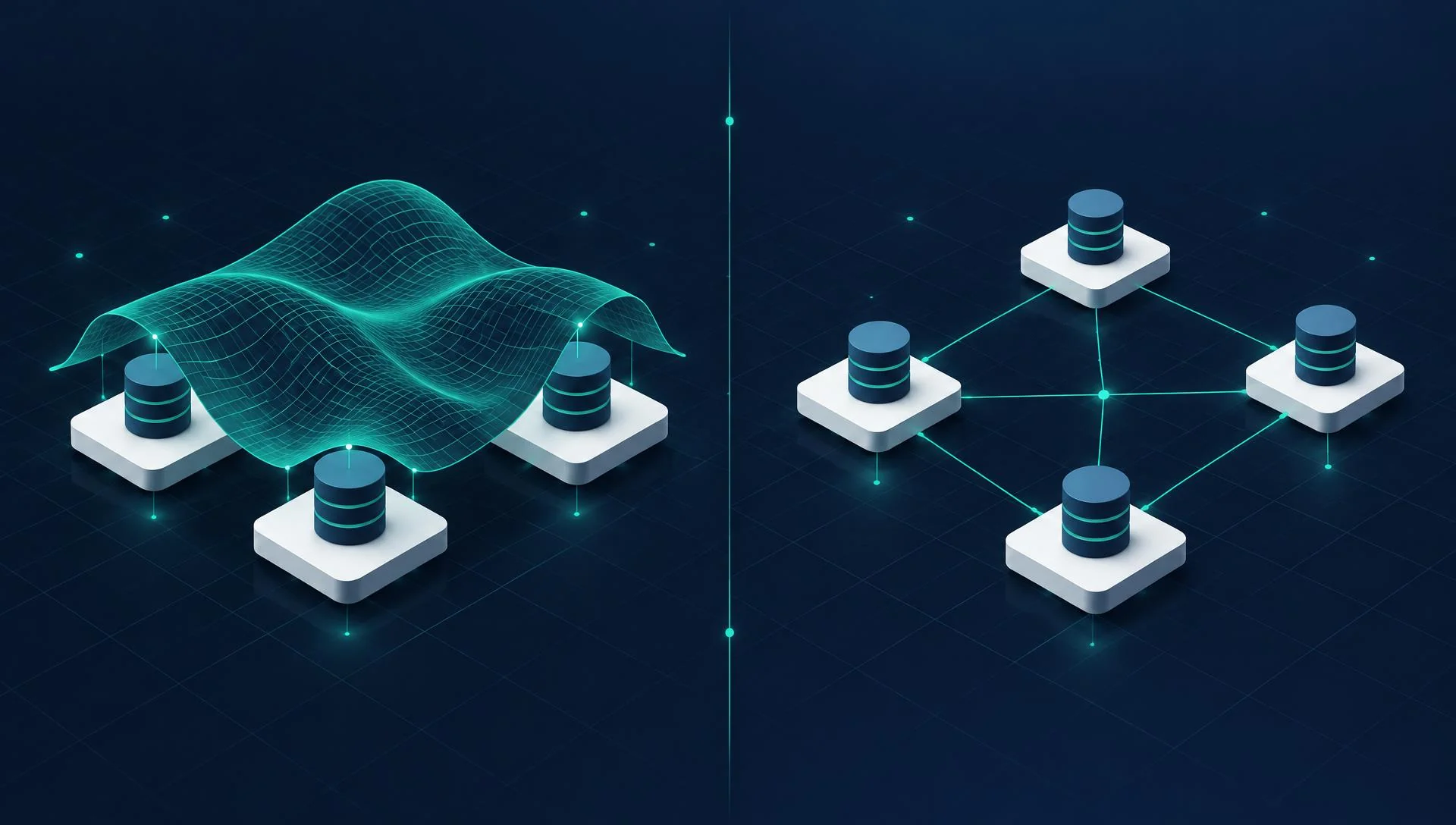
Data fabric and data mesh are two prominent approaches to modern data architecture. While both aim to solve data management challenges at scale, they take fundamentally different approaches.
The Challenge Both Address
Organizations struggle with:
- Data scattered across many systems
- Difficulty finding and accessing data
- Inconsistent data quality and definitions
- Slow time-to-value for new use cases
- Scaling data team bottlenecks
Both data fabric and data mesh attempt to solve these problems, but with different philosophies.
What is Data Fabric?
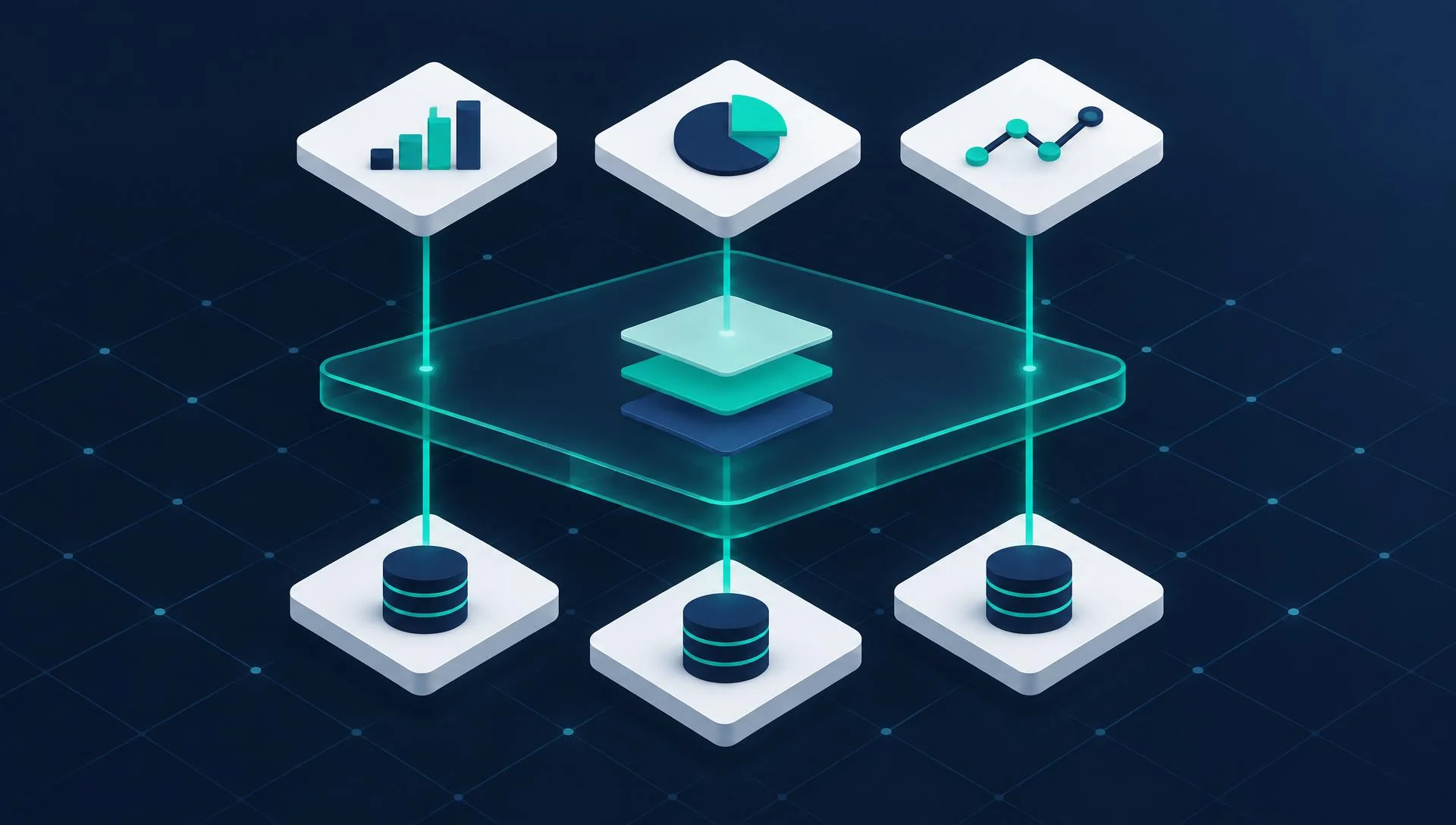
Data fabric is an architecture and technology approach that creates a unified data management layer across all data sources and targets.
Key Characteristics:
- Technology-centric approach
- Centralized metadata and governance layer
- Active data management through automation
- AI/ML-driven recommendations and optimization
- Virtual integration across sources
How It Works:
- Connect all data sources to a metadata layer
- Use AI to understand relationships and semantics
- Provide unified access regardless of data location
- Automate governance and quality enforcement
- Recommend optimal data access patterns
Strengths:
- Unified view across distributed data
- AI-powered automation reduces manual effort
- Strong governance through central control
- Works with existing data infrastructure
- Vendor-driven with mature tooling
What is Data Mesh?
Data mesh is an organizational and process approach that decentralizes data ownership to domain teams.
Key Characteristics:
- Organization-centric approach
- Distributed ownership by business domains
- Data treated as a product
- Federated governance with global standards
- Self-serve data platform
How It Works:
- Organize around business domains (not technology)
- Each domain owns and publishes data products
- Central platform team provides shared infrastructure
- Federated governance ensures interoperability
- Consumers self-serve from domain products
Strengths:
- Scales with organizational growth
- Domain expertise drives data quality
- Clear ownership and accountability
- Reduces central bottlenecks
- Aligns data with business structure
Key Differences
| Aspect | Data Fabric | Data Mesh |
|---|---|---|
| Focus | Technology | Organization |
| Ownership | Centralized | Distributed |
| Governance | Unified | Federated |
| Scaling | Through automation | Through decentralization |
| Primary Value | Integration | Autonomy |
| Implementation | Tool deployment | Org transformation |
When to Choose Data Fabric
- You need to unify existing data without major organizational change
- AI-powered automation can address your integration challenges
- Centralized governance is important (e.g., regulated industries)
- You want incremental improvement without disruption
- Your organization structure doesn't align with data domains
When to Choose Data Mesh
- Central data teams are a bottleneck
- Domain expertise is crucial for data quality
- You want clear ownership and accountability
- Your organization is already domain-oriented
- You're willing to invest in organizational change
Can You Do Both?
Yes! Many organizations combine elements:
- Use mesh principles for ownership and organization
- Use fabric technologies for integration and automation
- Apply federated governance with central standards
- Let domains own products while fabric provides connectivity
Implementation Considerations
Data Fabric:
- Evaluate vendor solutions carefully
- Plan metadata integration strategy
- Define governance automation rules
- Train teams on unified platform
Data Mesh:
- Identify domain boundaries
- Develop data product thinking
- Build self-serve platform capabilities
- Establish federated governance model
Conclusion
Data fabric and data mesh aren't mutually exclusive—they address different aspects of data management. Data fabric provides the technology layer for integration and automation, while data mesh provides the organizational model for scaled ownership. Many successful implementations combine elements of both based on organizational needs.
Frequently asked questions
Are data fabric and data mesh mutually exclusive?
No. A team can use shared integration and metadata capabilities alongside domain ownership of data products. Data mesh emphasizes responsibilities and an operating model; data fabric commonly describes connected data-management capabilities. Define the responsibilities and technical requirements in your environment rather than treating the labels as exclusive product choices.
Does buying a platform create a data mesh?
No. Domain ownership, product responsibilities and shared governance standards require organizational decisions. Technology can provide discovery, access, validation and supporting infrastructure, but it cannot assign business accountability by itself. Evaluate the operating model and consumer tasks alongside the platform capabilities.
How can federated governance preserve common standards?
Agree shared requirements for product identification, business definitions, access, quality evidence and interoperability. Domain teams apply them to the products they own, with clear escalation for conflicts and exceptions. Federation distributes responsibility while retaining agreed boundaries; it does not mean each domain invents unrelated rules for every shared requirement.