WHEN DATA QUALITY BECOMES AUTONOMOUS
Why trusted data will no longer wait for a human to notice. Inside the rise of Data Quality Agents: what autonomous detection, root-cause reasoning, and self-healing remediation deliver that rule-based monitoring never could.
Why Data Quality Can No Longer Be a Human-Paced Job
For two decades, data quality has been a human-paced discipline: rules written by people, thresholds tuned by people, incidents chased by people. In 2026, that pace is the problem.
A night guard who checks the building once can tell you it was fine at 2 a.m. He cannot tell you what happened at 2:15. Most quality programs work the same way - a scheduled check confirms the data looked right the last time someone looked. Between checks, drift, broken joins, and silent schema changes pass straight through.
By the time an analyst notices the variance, the data has already trained a model, fed an agent, and shaped a decision. Catching it afterward is no longer containment. It is forensics.
This edition covers the shift now moving onto data-leadership agendas: Data Quality Agents - autonomous systems that detect, diagnose, and remediate quality issues continuously. Not a faster dashboard. A different operating model.
"Augmented data quality - using AI to automate profiling, anomaly detection, and remediation - is becoming the default expectation for data quality tooling, not a differentiator." - Gartner
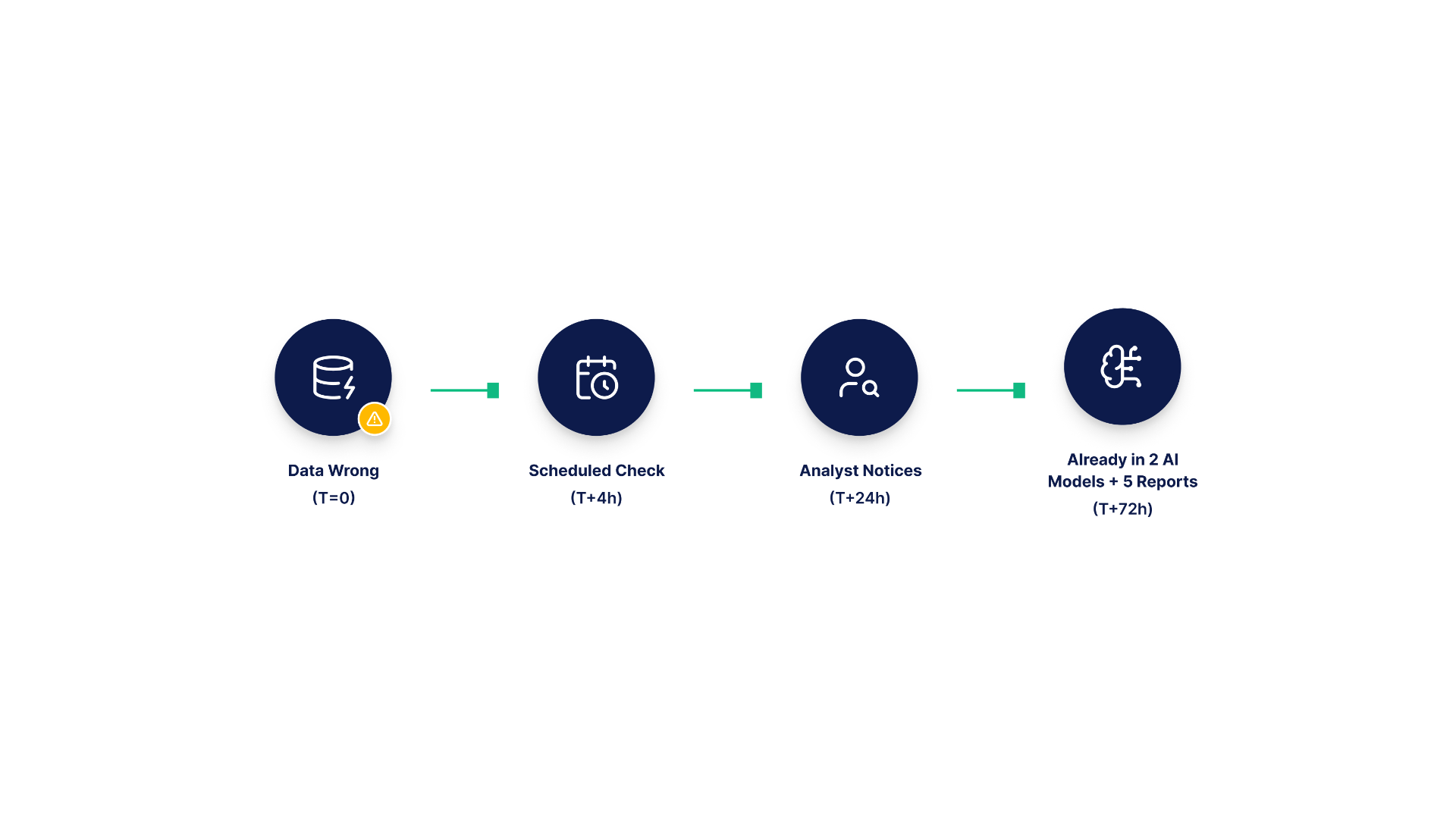
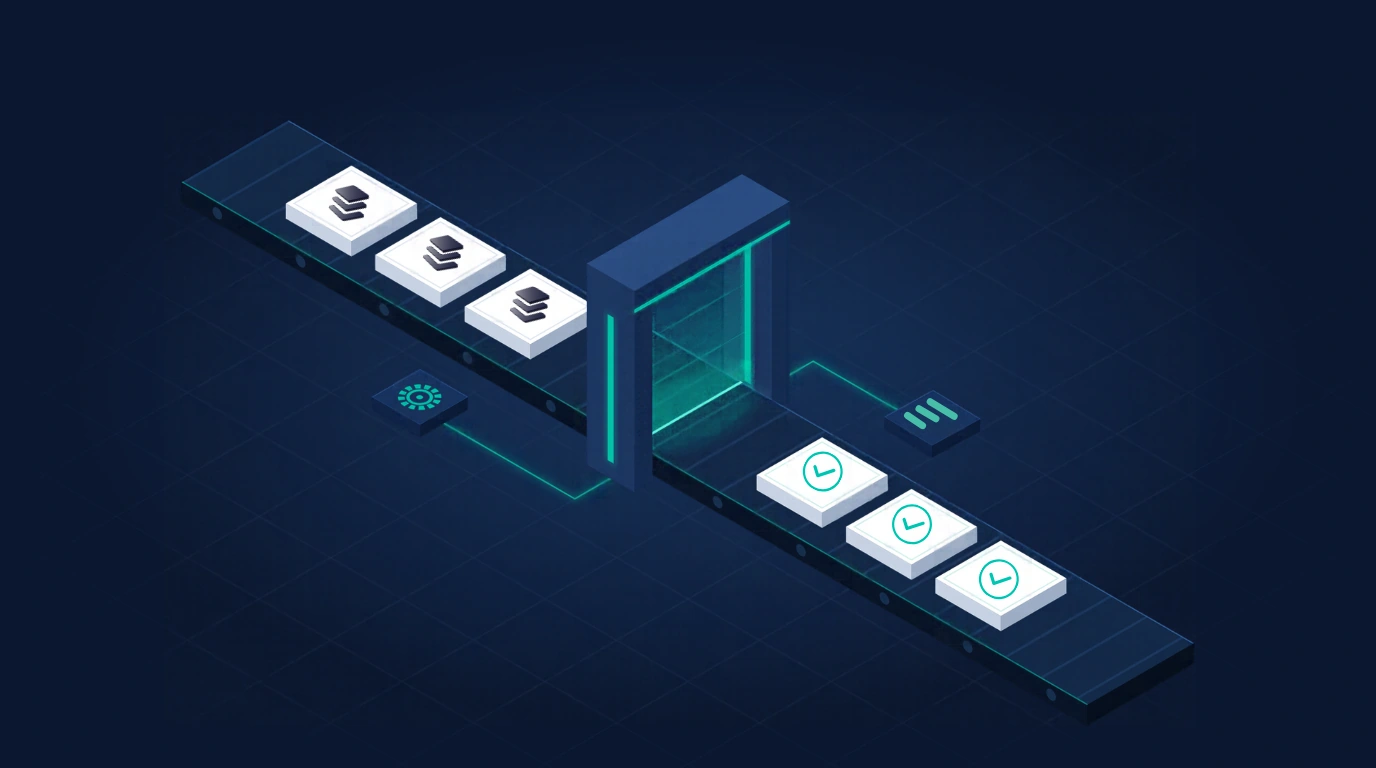
Infographic 1: Data issues compound fast - every hour of delay multiplies the blast radius across AI models and reports.
Autonomy, Reasoning, Action: What Makes a Data Quality Agent
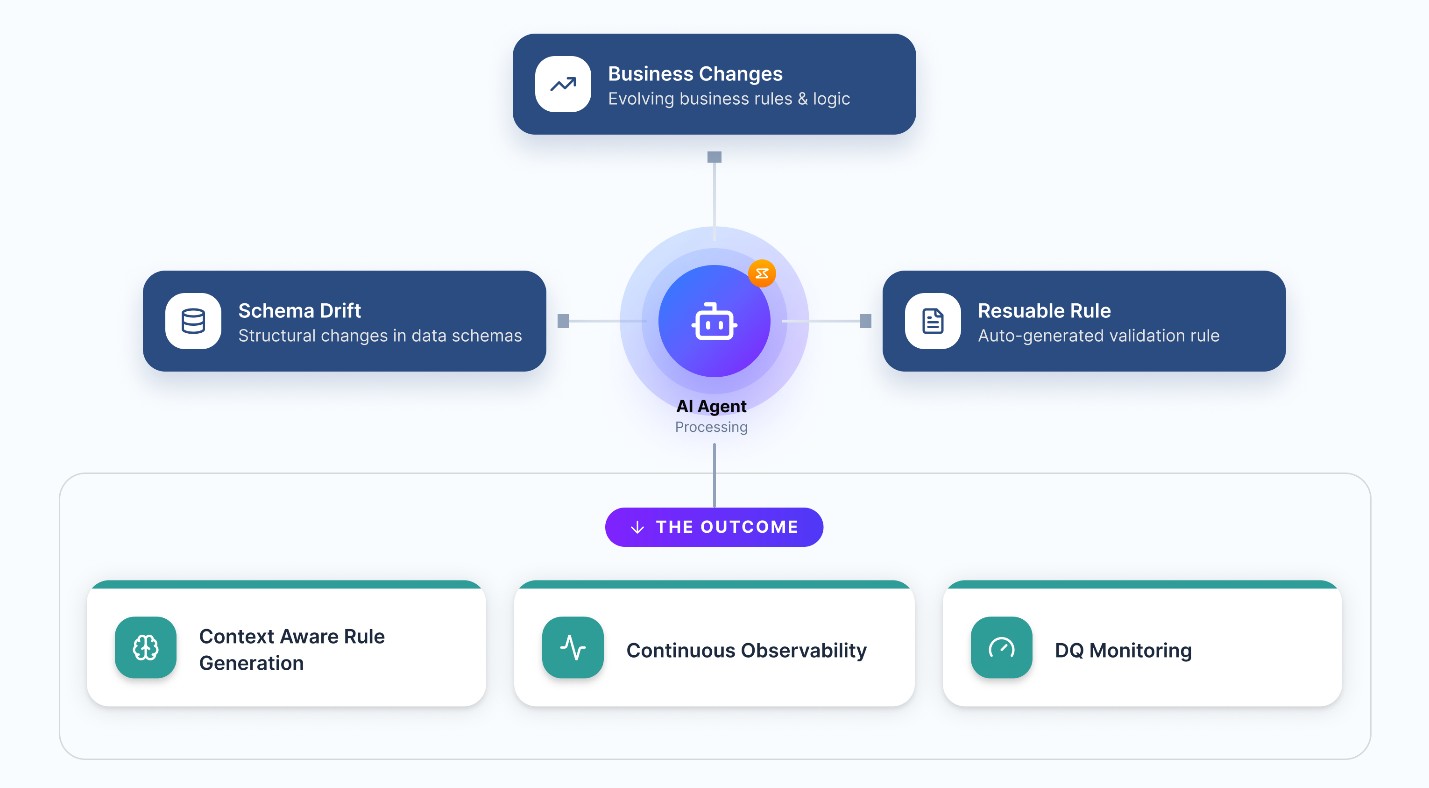
The terms get blurred - monitoring, observability, "AI-powered quality." A Data Quality Agent is something more specific: an intelligent actor that watches data, reasons about what it sees, and acts to keep it trustworthy - with little or no human in the loop.
Think of the difference between a smoke alarm and a fire crew. Observability tells you something is wrong. An agent figures out why and helps make it right. Three properties separate the two.
- Autonomy - Operates on its own initiative across the data lifecycle, deciding what is worth checking - instead of running only the rules a human pre-defined and tuned.
- Reasoning - Does not just flag an anomaly. Correlates signals across lineage, forms hypotheses, and traces a problem to its likely root cause in minutes, not hours.
- Action - Closes the loop. Recommends fixes, triggers policy-bound remediation, alerts downstream consumers, and learns from every outcome.
Observability and augmented quality were the build-up; agents are the layer that finally acts. Gartner's reframing of data quality around augmented, AI-driven capabilities points the same way: quality is moving from human-maintained rules to a system that maintains itself.
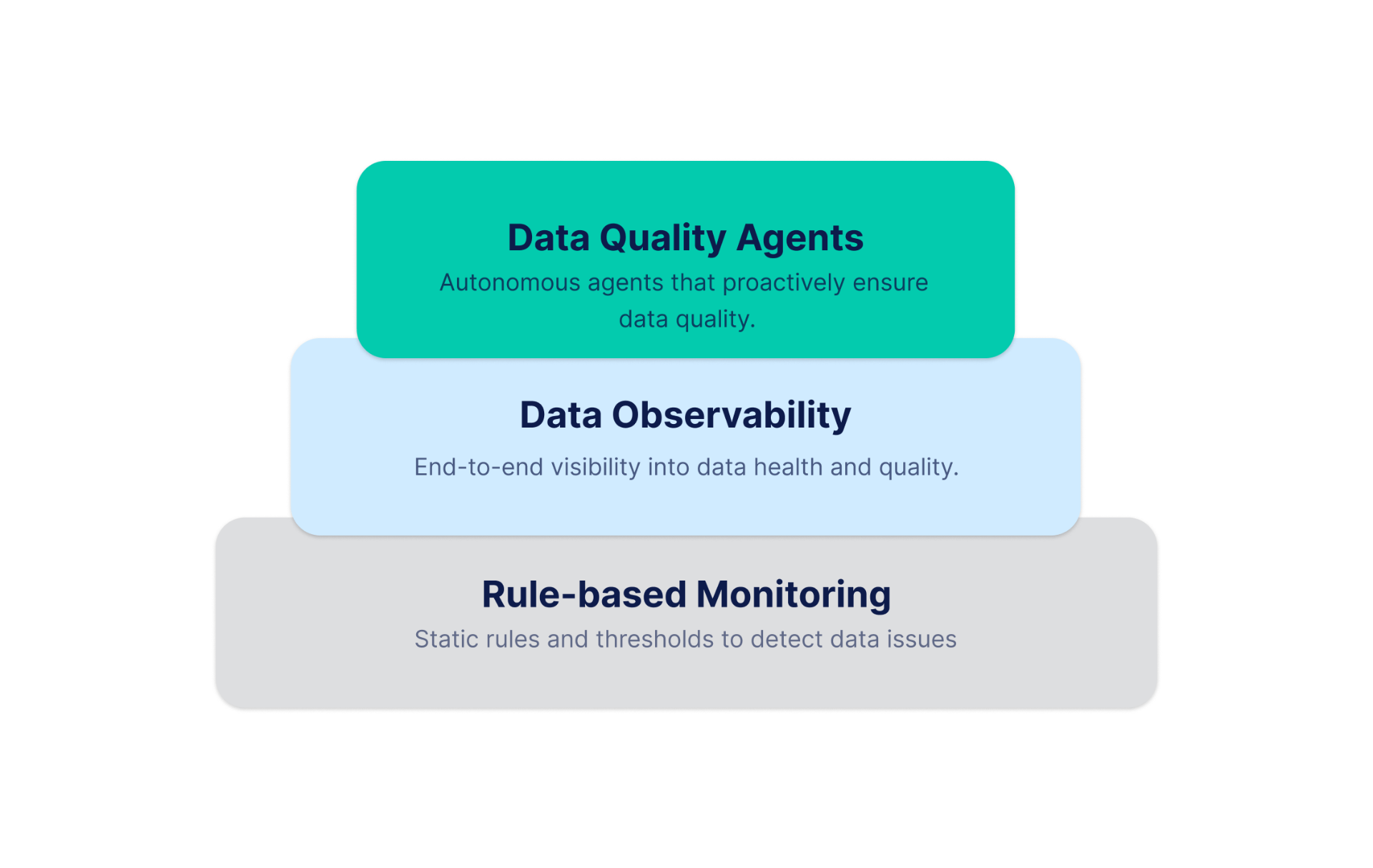
Infographic 2: The maturity stack - from rule-based monitoring to data observability to autonomous data quality agents.
Who This Affects - And How
The shift to autonomous quality lands differently for data leaders and the engineers who run the estate. Both ends of the org have to move; neither can carry the change alone.
| Dimension | Data Leaders (CDOs / CIOs) | Data Engineers / Architects / ETL Developers |
|---|---|---|
| Current reality | Accountable for trusted, AI-ready data across the estate, but reliant on scheduled checks and downstream incident reports. | Authoring, tuning, and maintaining thousands of static rules across pipelines that change faster than the rules can keep up. |
| What's broken | Quality posture is reported in arrears - issues surface in board decks, regulator queries, or model drift, not in time to prevent impact. | Most time is spent chasing incidents and firefighting alerts rather than building new data products. |
| The 2026 shift | From owning rules and dashboards to owning policy, intent, and the SLAs that autonomous agents enforce continuously. | From rule authors and incident responders to agent supervisors who define guardrails and review exceptions. |
| Failure pattern | Investing in more dashboards and more rules without changing the underlying human-paced operating model. | Adding more pipelines and more alerts without reducing the cognitive load on the team. |
| What good looks like | A governed, auditable autonomy layer where trusted data is a reported SLA tied to AI and business outcomes. | Continuous, AI-driven detection, diagnosis, and remediation - with humans in the loop only for policy and exceptions. |
| The new standard | Data quality is a board-level metric backed by autonomous agents, not a periodic engineering report. | Engineering capacity shifts to higher-value work: data products, contracts, and AI enablement. |
Table: How the shift to autonomous data quality lands differently for data leaders and the engineers who run the estate.
What Is Different in 2026
The capabilities behind Data Quality Agents were overdue for most organizations. Agentic AI has made them urgent. When software agents act on data without a human reviewing the output, the slow feedback loop that once contained bad data simply disappears.
A wrong number in a report used to get flagged, investigated, and fixed before it did much damage. An agent does not wait for that review - it acts on whatever it is given. Quality can no longer be a scheduled check confirming the past; it has to be a continuous loop operating in the present.
"Platforms built for human-driven, periodic validation are structurally insufficient for agentic operating models. Agents consume data continuously and cannot wait for a scheduled check to confirm that what they are working with is reliable." - Forrester, The Forrester Wave: Data Quality Solutions, Q1 2026
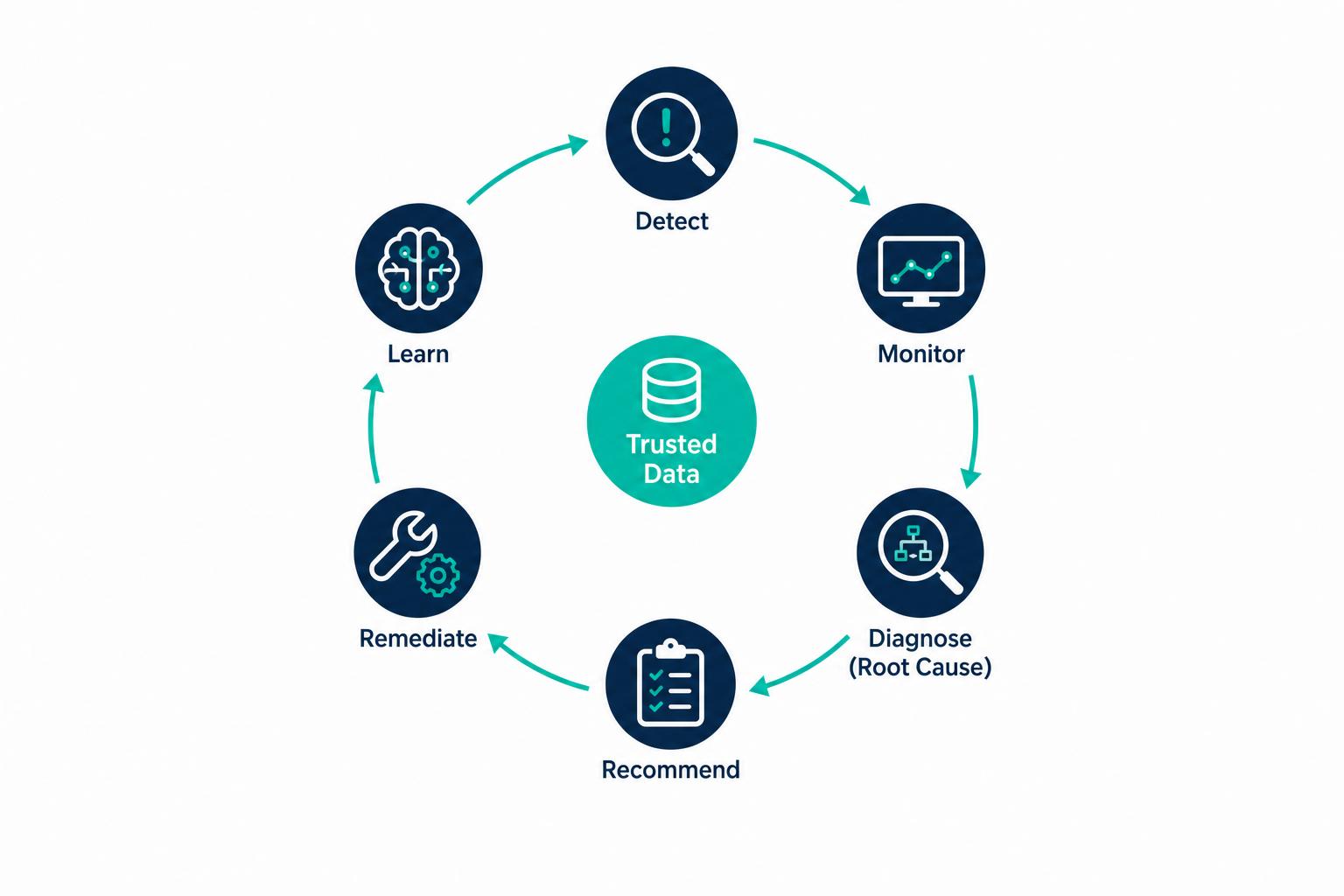
Infographic 3: The closed loop - Detect, Monitor, Diagnose, Recommend, Remediate, Learn - all centered on trusted data.
Looking Ahead
The destination both Gartner and Forrester point toward is consistent: data management acquires an autonomous intelligence layer, and trusted, AI-ready data moves from a governance checkbox to the constraint that decides whether AI works at all.
For data leaders, the practical implication is where human effort goes. The work shifts from operating quality - writing rules, chasing incidents - to supervising it: setting the policy, guardrails, and intent that agents enforce. The organizations scaling AI successfully in 2026 will not be the ones watching their data the hardest. They will be the ones whose data largely watches itself.
- From operators to supervisors - Teams stop hand-authoring and chasing rules. They define policy and intent; agents handle detection, diagnosis, and routine remediation - freeing scarce expert capacity for higher-value work.
- AI-ready data as a board metric - Trusted data becomes a reported, governed SLA rather than an engineering aside. Autonomous quality is the mechanism that sustains it at AI scale.
- Governed, auditable autonomy - As regulation tightens around AI inputs, agent logs and lineage become evidence that AI systems consumed validated, governed data - turning quality into a compliance asset.
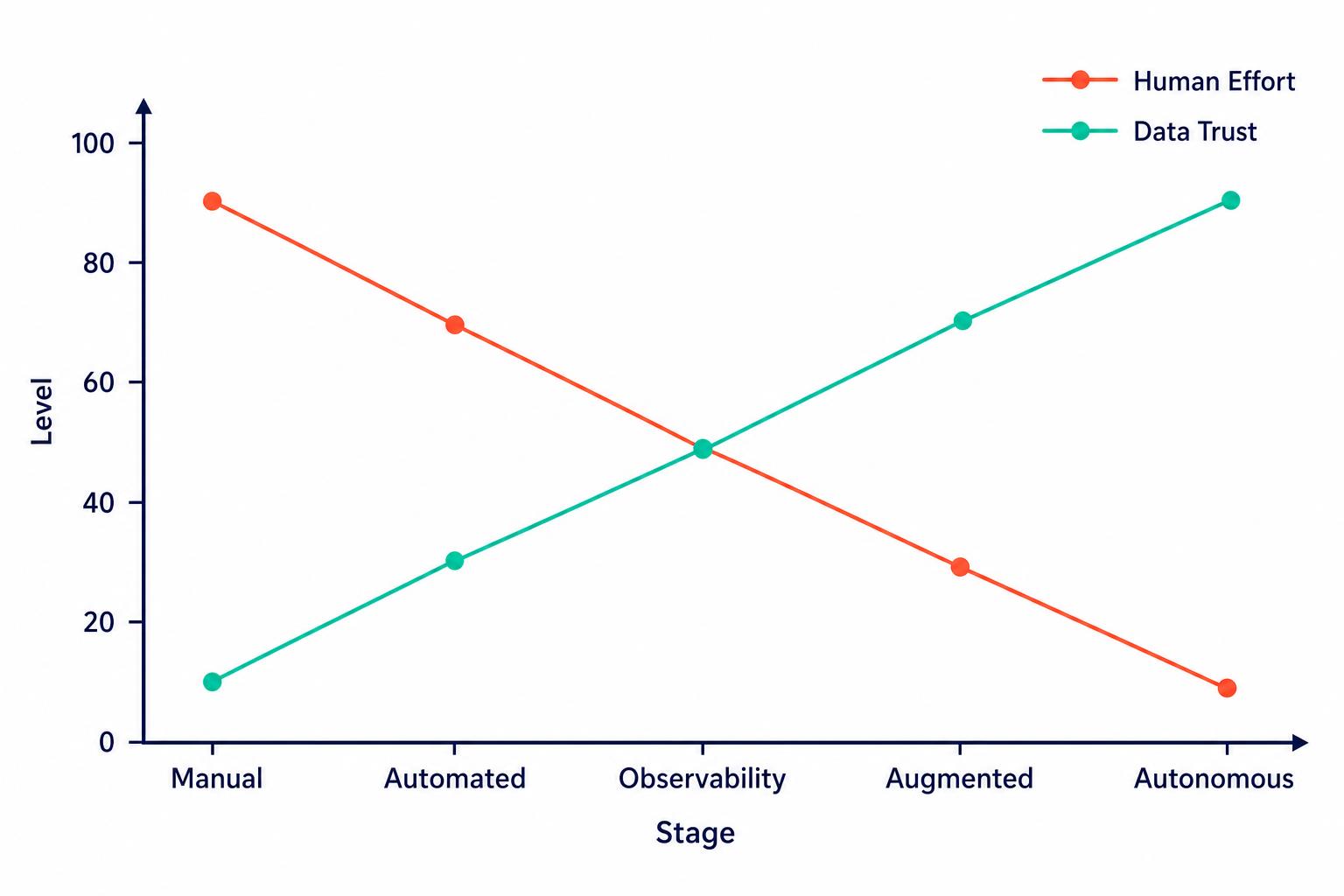
Infographic 4: As data quality matures from manual to autonomous, human effort declines while data trust rises.
Operationalize It With RightSight
RightSight is RightData's data observability platform - and its Data Quality Agents put everything in this edition into practice. They watch your estate continuously, detect issues before they reach your models and dashboards, reason through root cause across lineage, and remediate within the guardrails you set. Tables, pipelines, schema, freshness, AI-powered anomaly detection - one autonomous layer across the estate.
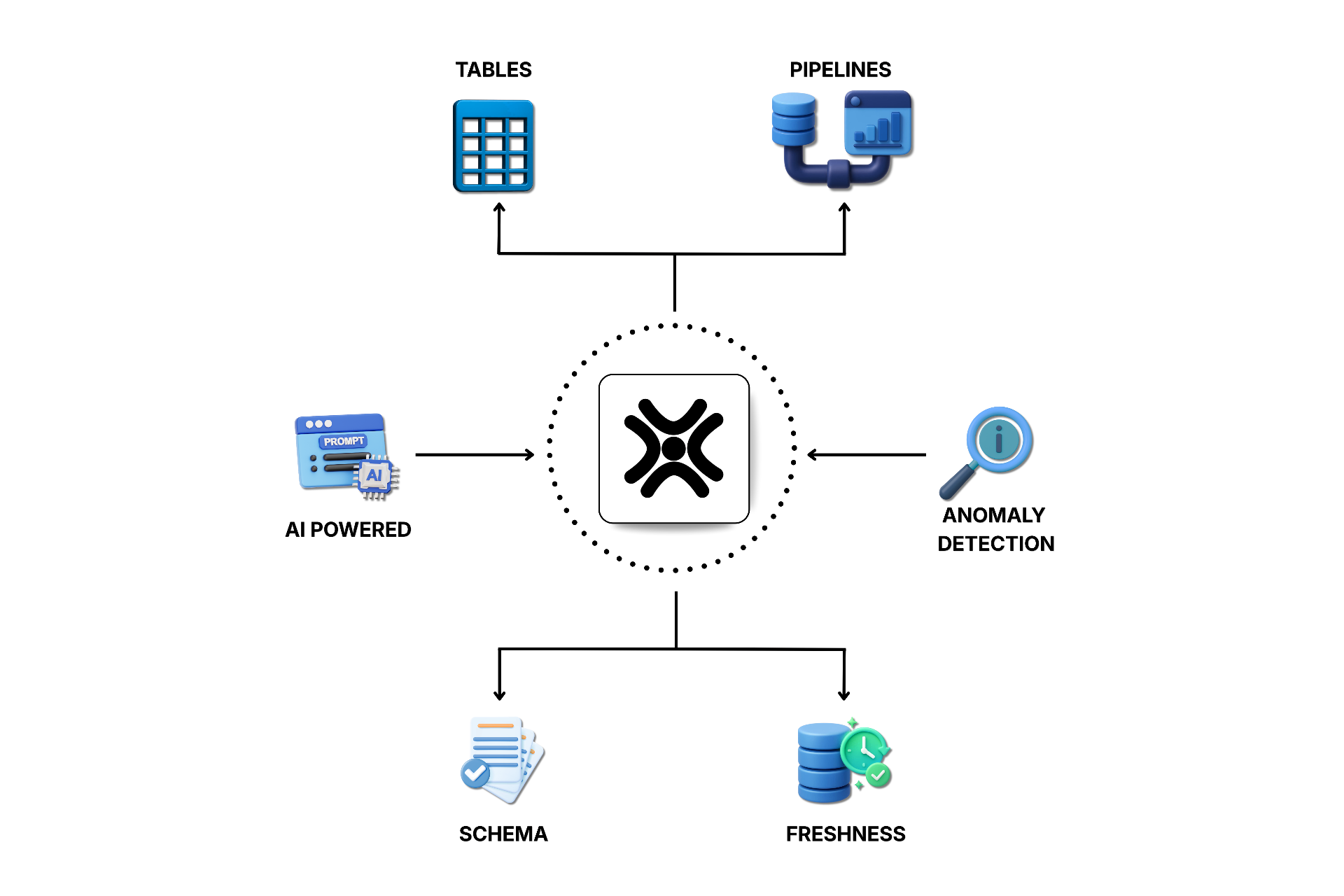
RightSight unifies tables, pipelines, schema, freshness, AI-powered monitoring, and anomaly detection in one autonomous observability layer.
contact@getrightdata.com • www.getrightdata.com • © 2026 RightData
Stay ahead in the world of trusted data
Get insights on data quality, governance, observability, and AI-ready data - delivered straight to your inbox.
Edition Details
Edition
June 2026
Topics
Explore More Resources
Discover related content across our resource library

Get the next DataPulse edition
Subscribe for research-led briefings on data quality, observability, governance, and AI readiness.
Stay ahead in the world of trusted data
Get insights on data quality, governance, observability, and AI-ready data - delivered straight to your inbox.