Cloud migration introduces unique security challenges that organizations must address proactively. This guide identifies common security pitfalls and strategies for maintaining data security throughout migration.
The Security Challenge
Cloud migration changes the security equation:
- Data moves outside traditional perimeters
- Shared responsibility models apply
- New attack surfaces emerge
- Compliance requirements shift
- Visibility can decrease
Organizations that don't address security during migration create vulnerabilities that persist in the cloud environment.
Common Security Challenges
1. Misconfigured Cloud Resources
The Problem: Default settings and rushed deployments leave resources exposed.
Common Issues:
- Publicly accessible storage buckets
- Overly permissive access policies
- Unencrypted data stores
- Default credentials unchanged
Mitigation:
- Implement infrastructure-as-code with security policies
- Use cloud security posture management (CSPM) tools
- Automate security configuration checks
- Require security review before deployment
2. Identity and Access Management Gaps
The Problem: Cloud IAM differs from on-premises models, creating confusion and gaps.
Common Issues:
- Over-provisioned access rights
- Stale accounts and credentials
- Inconsistent policies across environments
- Lack of MFA enforcement
Mitigation:
- Implement least privilege access
- Regular access reviews and cleanup
- Federate identity where possible
- Enforce MFA for all users
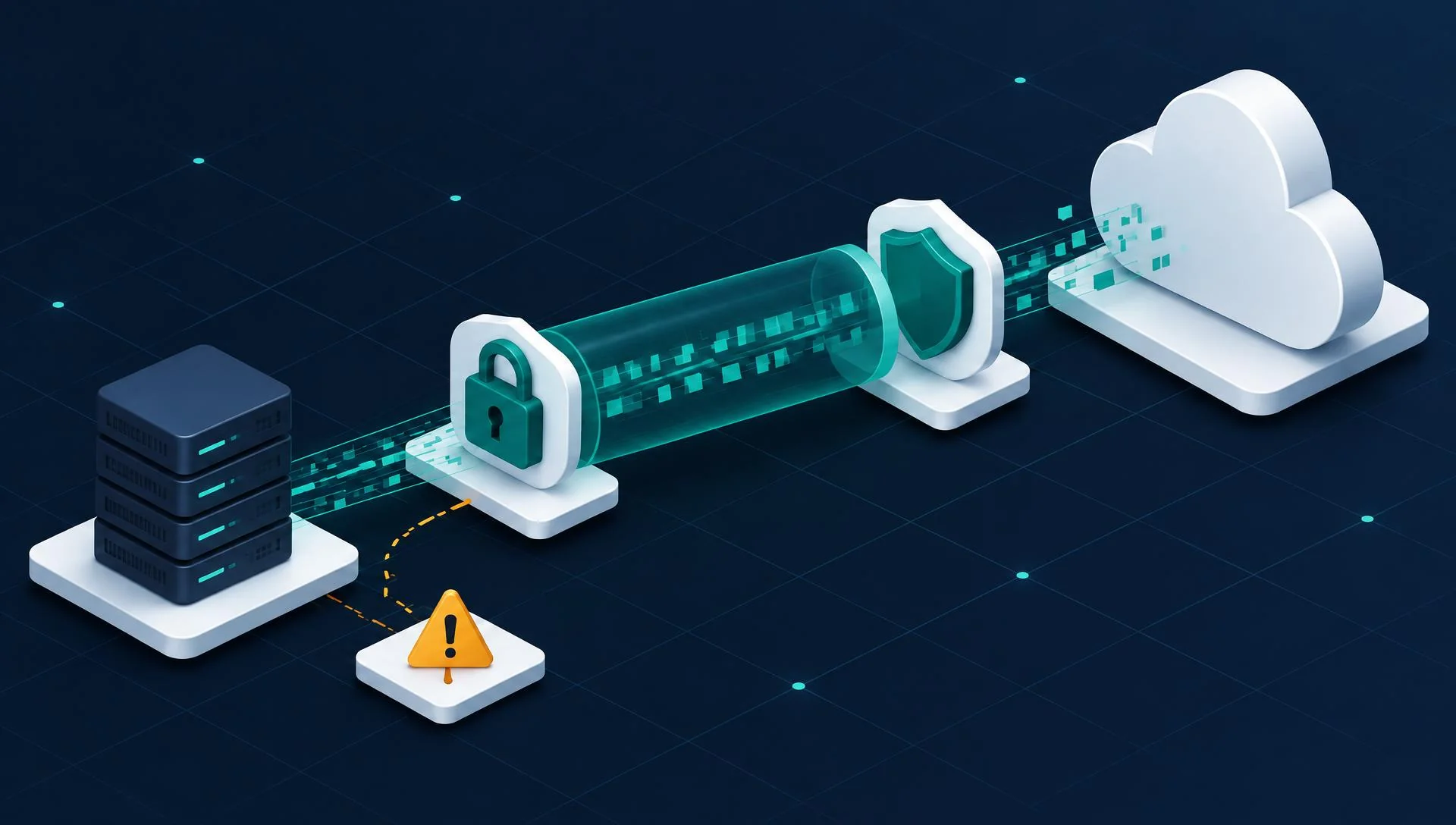
3. Data Exposure During Transfer
The Problem: Data in transit during migration can be intercepted or exposed.
Common Issues:
- Unencrypted data transfers
- Insecure temporary storage
- Insufficient transfer monitoring
- Inadequate logging
Mitigation:
- Encrypt all data in transit
- Use secure transfer services
- Monitor transfer activities
- Implement comprehensive logging
4. Inadequate Encryption Practices
The Problem: Encryption may be incomplete or improperly managed.
Common Issues:
- Data not encrypted at rest
- Poor key management practices
- Inconsistent encryption across environments
- Forgotten or lost encryption keys
Mitigation:
- Encrypt all sensitive data at rest
- Use cloud key management services
- Implement key rotation policies
- Document encryption architecture
5. Compliance Gaps
The Problem: Cloud environments may not meet regulatory requirements.
Common Issues:
- Data residency violations
- Audit logging insufficient
- Retention policies not enforced
- Required controls missing
Mitigation:
- Map compliance requirements to cloud controls
- Use compliance-certified cloud services
- Implement comprehensive audit logging
- Regular compliance assessments
6. Visibility and Monitoring Gaps
The Problem: Traditional monitoring tools may not work in cloud environments.
Common Issues:
- Blind spots in cloud infrastructure
- Insufficient log collection
- Lack of real-time alerting
- No centralized security view
Mitigation:
- Deploy cloud-native monitoring tools
- Centralize logs and alerts
- Implement SIEM integration
- Establish 24/7 monitoring capabilities
7. Insecure APIs and Interfaces
The Problem: Cloud services are accessed via APIs that can be attacked.
Common Issues:
- APIs without authentication
- Exposed API keys
- Insufficient rate limiting
- No API activity monitoring
Mitigation:
- Secure all APIs with authentication
- Rotate API keys regularly
- Implement rate limiting and throttling
- Monitor API usage for anomalies
8. Shared Responsibility Confusion
The Problem: Unclear who is responsible for what between cloud provider and customer.
Common Issues:
- Assuming provider handles security
- Gaps between responsibilities
- Inconsistent understanding across teams
Mitigation:
- Document shared responsibility clearly
- Train teams on their responsibilities
- Verify provider controls meet requirements
- Fill gaps with additional controls
Security Migration Best Practices
Assess Before You Migrate: Understand data sensitivity and security requirements before moving.
Design Security In: Incorporate security from the start, not as an afterthought.
Migrate in Phases: Move gradually, validating security at each phase.
Train Your Teams: Ensure staff understand cloud security differences.
Automate Where Possible: Manual security processes don't scale in cloud.
Monitor Continuously: Cloud environments change rapidly; monitoring must keep pace.
Plan for Incidents: Have response plans ready for security events.
Conclusion
Cloud migration security requires deliberate attention to new challenges. Organizations that proactively address these common issues will migrate more safely and operate more securely in the cloud. Those that treat security as an afterthought create vulnerabilities that are difficult to remediate later.
Frequently asked questions
Does a cloud provider assume responsibility for every security control?
No. Responsibilities depend on the selected service and deployment. The provider manages specified infrastructure controls, while the organization retains responsibilities such as its data, identities and configuration as applicable. Review the provider’s current shared-responsibility documentation for each service and assign the remaining control owners explicitly.
Does encrypting a migration transfer establish that the migrated data is correct?
No. Protecting a transfer and validating its business result address different requirements. A protected transfer can still carry missing records, incorrect mappings or unintended values. Use appropriate security controls alongside scoped data validation and reconciliation, with separate evidence and accountable review for each requirement.
What should be reviewed before migrated data is made available to users?
Review the intended user roles, permitted operations, data classification and configured access for the selected services. Confirm the relevant logging and approved handling arrangements with the responsible security team. Validate the migrated population separately. A successful load is evidence of processing, rather than approval to expose the resulting data.